Advocate Visiting Card Design: Free Lawyer Business Card Templates
Plain, dignified advocate visiting card designs with room for your enrolment number, court and chamber address. Edit every line in the browser and download a print-ready PDF, PNG or 10-up sheet for free.
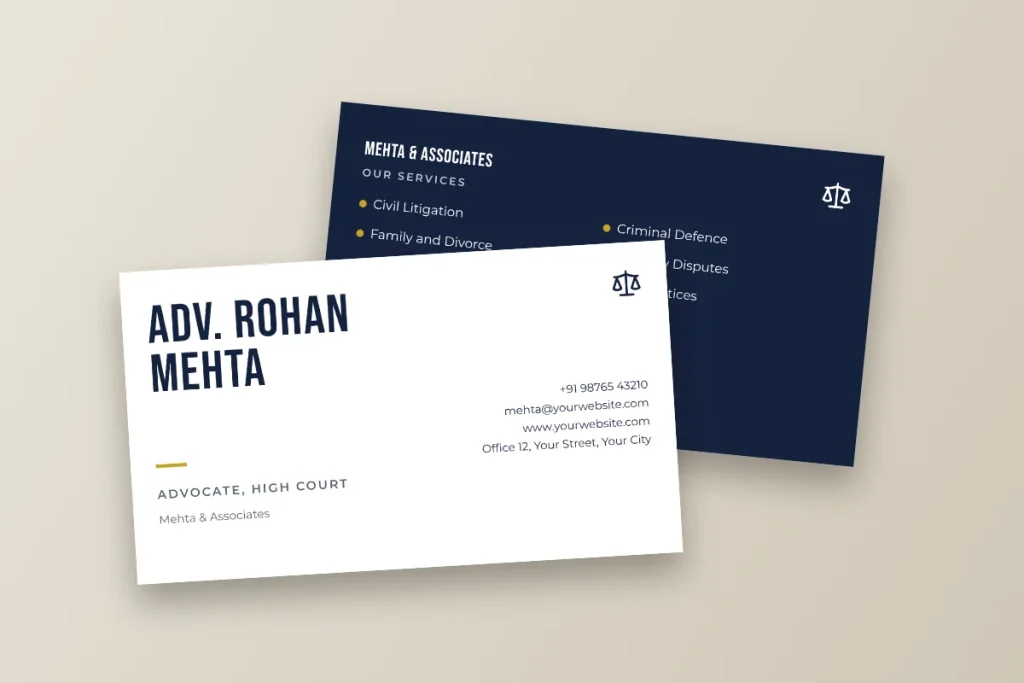
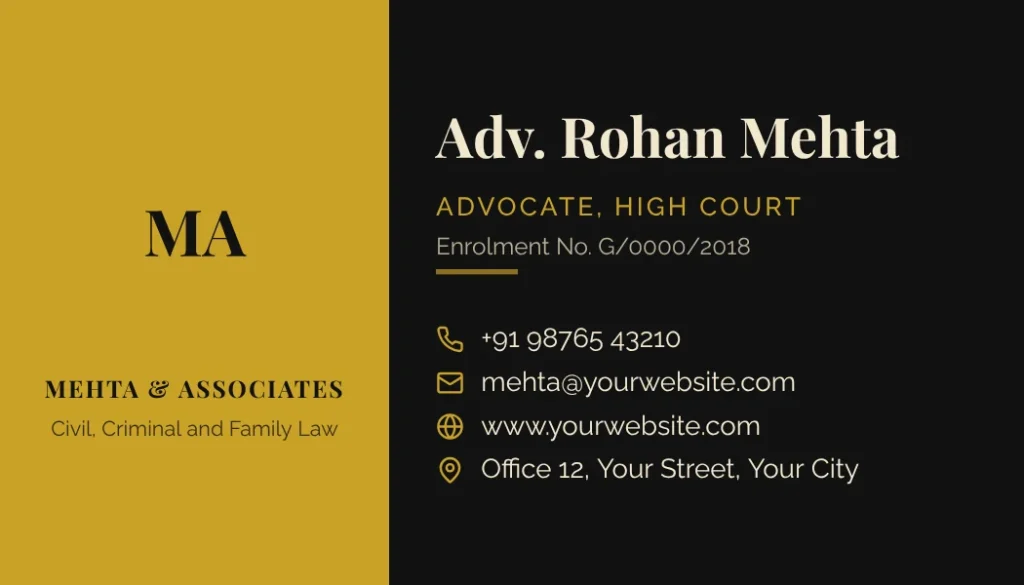
An advocate visiting card should be plain and factual: your name with the word "Advocate", your enrolment number and State Bar Council, the court where you practise, your chamber address and your phone and email. Nothing more is needed, and staying factual respects the Bar Council's rule against advertising. The lawyer business card templates below follow that layout in quiet navy, black, ivory and maroon designs.
Every template uses placeholder details (a sample name, a dummy enrolment number like G/0000/2018 and a made-up chamber address). Open any design in the free business card maker, replace the placeholders with your own details, and download.
8 free advocate visiting card templates
Hover or tap a card to see the back. Customize to edit and download.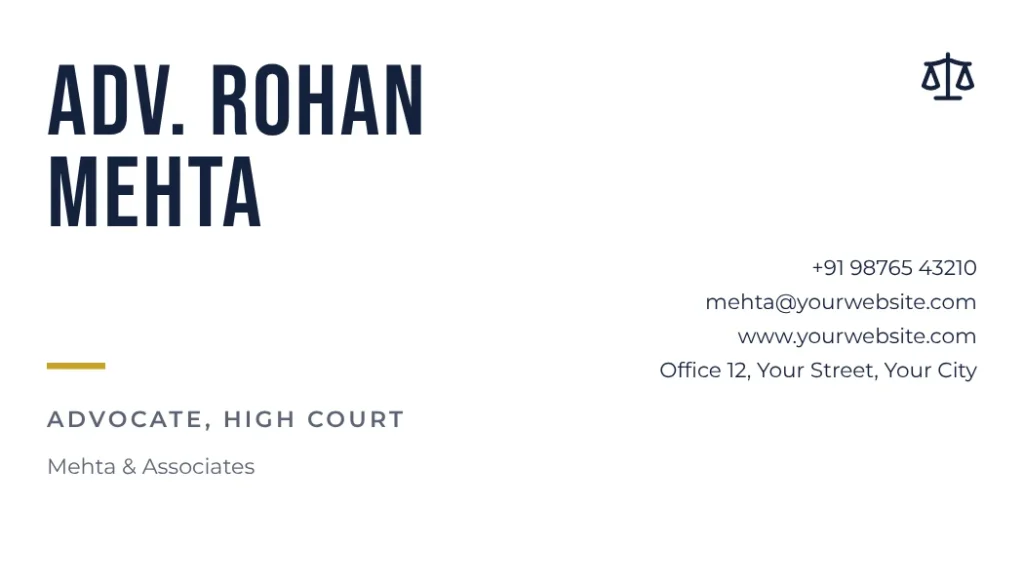







What to print on an advocate's visiting card
Indian advocates usually print the same core details, in roughly this order of importance:
- Name with prefix: "Adv." before the name, or "Advocate" as a separate line below it.
- Court of practice: "Advocate, High Court of Gujarat", "Advocate, District and Sessions Court" or "Supreme Court of India".
- Enrolment number and Bar Council: for example "Enrolment No. MAH/0000/2015".
- Chamber address: chamber or seat number in the court complex, plus an office address if you have one.
- Contact: mobile, landline for the office, email. A WhatsApp number is common for clients who send documents by phone.
- Firm name: if you practise as "Mehta and Associates" or similar, give it its own line.
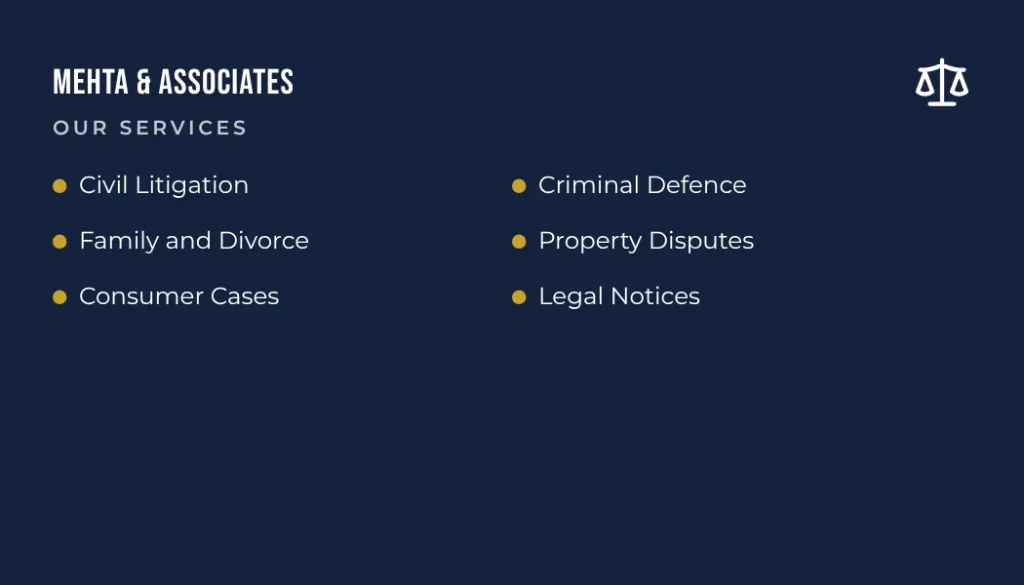
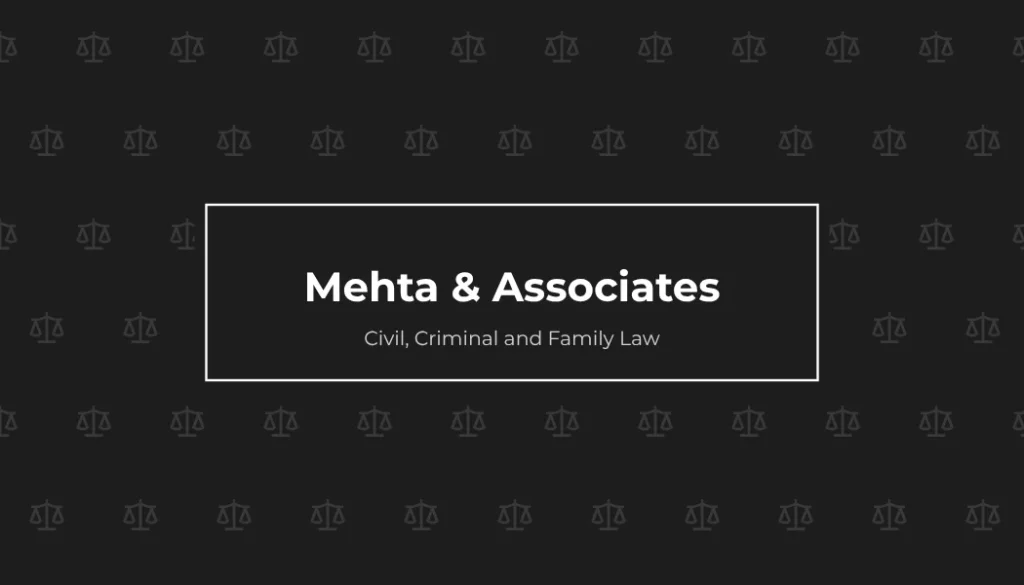
Areas of practice such as "Civil, Criminal and Family Law" are widely printed as a neutral description of what you handle. Phrase them as plain fields of practice, not as claims.
Bar Council of India rules and your card
Rule 36 in Part VI, Chapter II of the Bar Council of India Rules says: "An advocate shall not solicit work or advertise, either directly or indirectly." The same rules say sign-boards and name-plates should be of reasonable size, and stationery should not show past offices held or claims of specialisation. A 2008 BCI resolution allows an advocate's website to show name, address, phone, email, enrolment details, professional and academic qualifications and areas of practice.
Visiting cards are not specifically addressed, so the safe approach is to treat the card like stationery and keep it factual:
- Avoid words like "best", "expert", "top", "No. 1" or "specialist".
- Do not list past posts (for example a former government pleader post) as a selling point.
- Skip success rates, client testimonials and slogans that promise outcomes.
- Qualifications such as "B.A., LL.B." or "LL.M." are factual and fine to show.
US lawyers face a different test. ABA Model Rule 7.1 says: "A lawyer shall not make a false or misleading communication about the lawyer or the lawyer's services," and its comment treats letterhead and professional designations as communications. State rules vary, so check your state bar before adding taglines.
Design moods that suit a legal practice
Legal cards work best when they look calm and established. Good directions:
- Navy and white with a thin rule line under the name: the classic chamber look.
- Black and ivory with a serif typeface such as a Garamond or Times style.
- Maroon and cream, which echoes the old law book binding look many advocates like.
- Restrained gold used only for the name or a border, never as a busy background.
Many advocates add a small scales of justice symbol. Keep it small and neutral; it should identify the profession, not decorate the card. For more quiet layouts see the minimalist business card and elegant business card collections.
Back-side ideas for a lawyer business card
- Second address: High Court chamber on the front, city office with meeting hours on the back.
- Hindi or Gujarati version: the maker supports both scripts, which helps clients who read the regional language more easily.
- Contact QR code: a vCard QR lets a client save your number in one scan. Print it at least 0.8 x 0.8 in (about 2 x 2 cm) with a clear margin around it. More on this in the QR code business card templates.
Sample text layout
Front of the card, top to bottom:
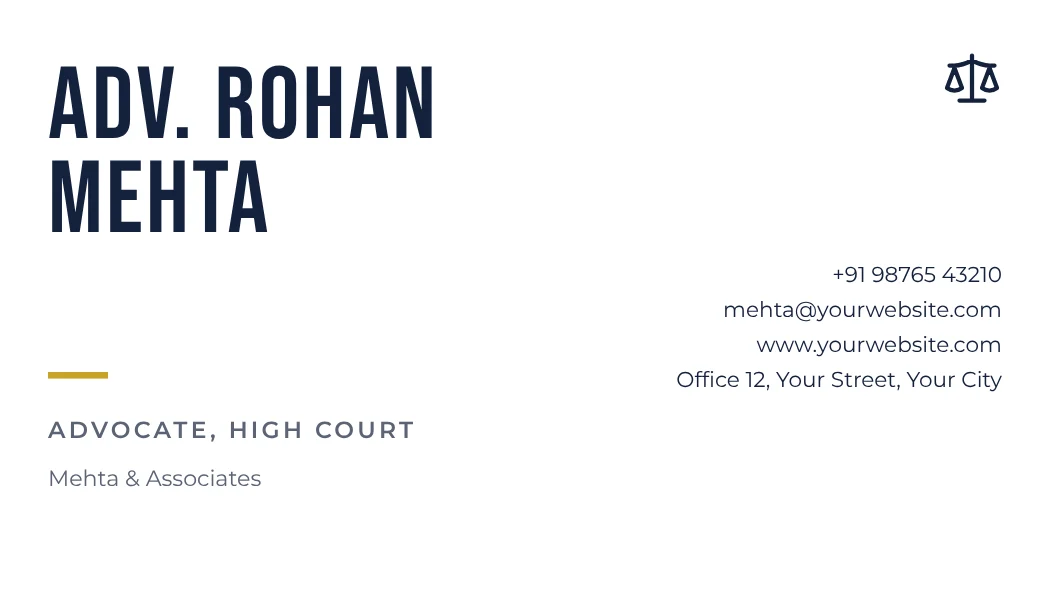
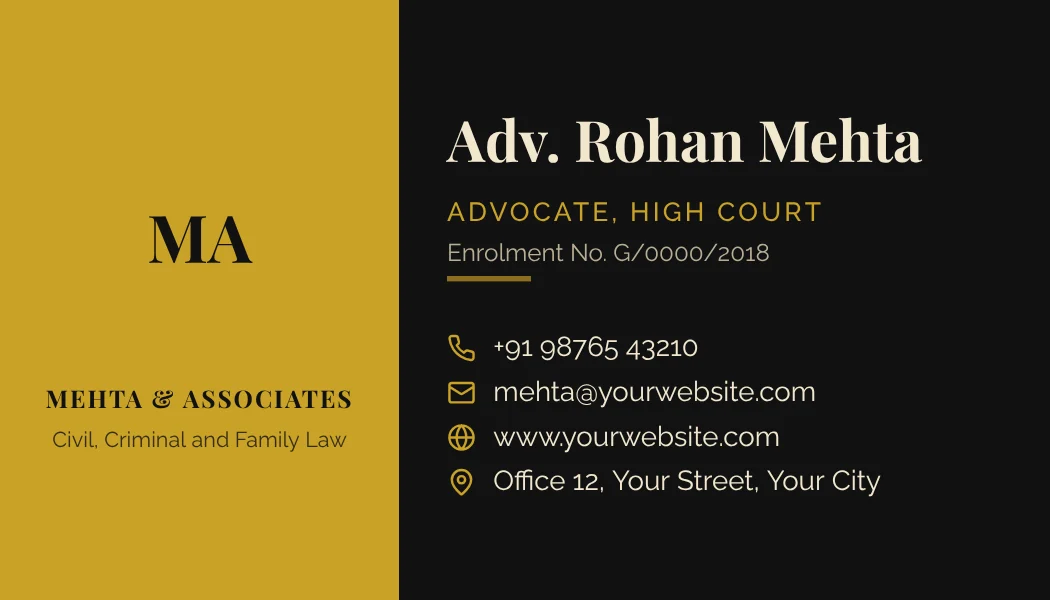
- Adv. Rohan Mehta
- B.Com., LL.B. | Advocate, High Court
- Mehta and Associates
- Civil, Criminal and Family Law
- Enrolment No. G/0000/2018 (Bar Council of Gujarat)
- Chamber No. 00, High Court Complex, City
- +91 00000 00000 | name@example.com
Back: office address, consultation hours ("Mon to Sat, 6 pm to 8 pm") and a vCard QR code.
Printing tips for advocate cards
In India, 3.5 x 2 inches is the most common card size; some printers use 91 x 55 mm, so ask your printer (details in the visiting card size guide). A matte or uncoated 300 to 400 gsm stock suits a legal card better than high gloss, and it takes a pen if you note a hearing date on the back for a client. Our paper thickness guide explains gsm and pt. Keep small text such as the enrolment number at 8 pt or larger so it stays readable.
Frequently asked questions
What should be written on an advocate visiting card?
Print your name with "Adv." or "Advocate", your qualifications, the court where you practise, your enrolment number and State Bar Council, chamber and office address, phone and email. A firm name and plain areas of practice are common. Leave out claims like "best" or "expert", because Bar Council rules bar advertising and claims of specialisation on stationery.
Can an advocate put a logo on a visiting card?
Many advocates use a small scales of justice symbol, and the rules quoted on this page do not specifically mention visiting card logos. Because Rule 36 bars advertising directly or indirectly, keep any symbol small and neutral and avoid anything that looks like a promotional brand. If you are unsure, ask your State Bar Council.
Is it compulsory to print the enrolment number?
No rule we have found makes the enrolment number compulsory on a visiting card, but it is standard practice and the 2008 BCI resolution lists enrolment details among the facts an advocate may show online. Printing it helps clients and court staff identify you and signals that you are a practising, enrolled advocate.
What colour is best for a lawyer visiting card?
Navy, black, maroon and ivory are the most popular because they look formal and print reliably. Use white or cream backgrounds with dark text for readability. Gold works as an accent on the name or a border, but a full gold or bright coloured background tends to look promotional, which does not suit a legal practice.
Can I make an advocate visiting card online for free?
Yes. Pick a template on this page, open it in the free card maker, replace the placeholder name, enrolment number and address, and download a print-ready PDF with bleed, a PNG, or a 10-up print sheet. Hindi and Gujarati text are supported if you want a bilingual card.
Sources
More templates
 CA Visiting Card DesignSet up a CA visiting card that stays within professional norms: plain, factual and precise, with your...
- Corporate Visiting Card DesignClean corporate visiting card templates for CEOs, directors, managers and team members, built to carry one...
- Elegant and Luxury Business Card TemplatesAn elegant business card pairs refined serif type, a dark or cream background and gold or metallic accents to...
- What to Put on a Business CardPut your name, job title, company, phone number, email and website on a business card. Add a logo, address,...