Why Scenic Production Matters in Modern Event Design
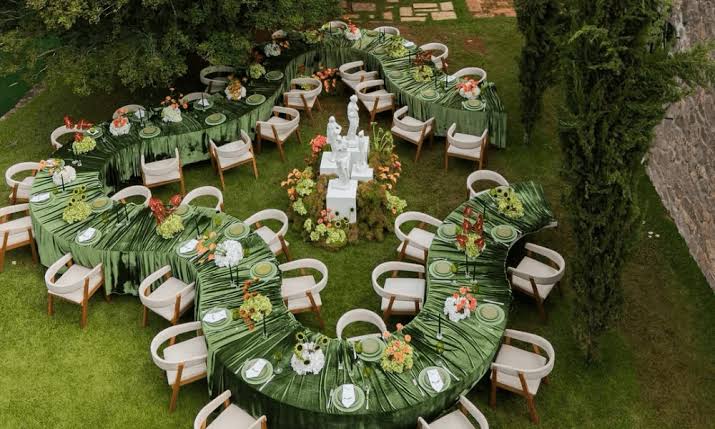
Modern business events are no longer simply about placing people in a room and following a scheduled program. Companies are increasingly focused on creating experiences that attract attention, communicate their brand, and encourage meaningful interactions with customers, clients, employees, and industry professionals. The physical environment plays an important role in achieving these goals.
This is why scenic production has become an essential part of modern event design. Scenic production combines creative concepts with physical structures, fabrication, graphics, lighting, technology, and installation to transform commercial spaces into purposeful environments. Whether a company is hosting a corporate conference, participating in a trade show, launching a product, or organizing an outdoor business activation, scenic production can help turn an ordinary location into an engaging experience.
What Is Scenic Production?
Scenic production is the process of creating the physical environment for an event or commercial experience. It can include stages, branded walls, backdrops, platforms, entrance structures, dimensional logos, display areas, signage, lighting, and interactive installations.
Unlike simple event decoration, scenic production is designed around specific objectives. Every element can be planned according to the company’s brand, audience, venue, event theme, and practical requirements.
For example, a company may need a stage for presentations, product displays for demonstrations, branded structures for visibility, and directional signage to guide attendees. Scenic production brings these components together into a unified environment.
Creating a Strong First Impression
First impressions matter in business. When attendees enter a conference, exhibition, or corporate event, the environment immediately communicates information about the organization hosting it.
A professionally designed scenic environment can establish a sense of quality and professionalism from the moment visitors arrive.
An attractive entrance structure can identify the event, while branded walls and architectural features can reinforce corporate identity. Lighting and carefully positioned graphics can draw attention to important areas.
For businesses operating large commercial properties, similar principles can apply to outdoor spaces. Parking lots used for corporate events, promotional activations, or customer gatherings can incorporate branded entry points, directional structures, sponsor displays, and event markers.
Supporting Brand Identity
One of the most important reasons scenic production matters is its ability to turn branding into a physical experience.
Instead of placing a logo on a few banners, businesses can integrate their identity into the entire environment. Brand colors, typography, imagery, messaging, and dimensional logos can become part of stages, walls, counters, displays, and architectural elements.
For companies exhibiting at industry events, trade show fabrication can help transform brand guidelines into customized physical structures.
This creates a more consistent experience. Visitors can recognize the company through multiple visual elements without feeling that they are simply surrounded by advertisements.
Making Trade Shows More Effective
Trade shows are highly competitive environments. A company may be surrounded by dozens of exhibitors all trying to attract the same audience.
A standard display may struggle to communicate a brand’s value in such a crowded setting. Scenic production can help create a distinctive environment that encourages visitors to stop and engage.
Professional trade show fabrication allows businesses to develop custom booth structures, product displays, counters, meeting areas, and branded architectural features.
A thoughtfully designed booth can also improve functionality. Different areas can be created for product demonstrations, private discussions, presentations, networking, and lead collection.
The result is an environment that supports both marketing and sales objectives.
Improving Audience Movement
Good event design is not only about appearance. It also needs to consider how people move through the space.
Scenic production can help establish natural pathways by positioning walls, displays, signs, stages, and entrance structures strategically.
For example, an exhibition environment can guide visitors from an entrance toward a product demonstration before directing them to a meeting area. At an outdoor business event, branded signs can help attendees locate entrances, parking areas, registration points, and activity zones.
This combination of design and functionality can improve the overall visitor experience.
Using Lighting to Create Impact
Lighting is another major component of scenic production. The right lighting design can highlight important areas and create a particular atmosphere.
Businesses can use lighting to emphasize a company logo, illuminate a product display, enhance a presentation stage, or make an entrance structure more visible.
Modern lighting systems can also support changing event programs. Different lighting effects can be used during presentations, product launches, networking sessions, or announcements.
However, lighting should be integrated into the overall design. Excessive or poorly positioned lighting can make an environment difficult to navigate or distract from important content.
Combining Physical and Digital Experiences
Technology has expanded what businesses can accomplish through scenic production. Digital screens, projection systems, interactive displays, and multimedia content can be integrated into physical structures.
For example, a business could use a large screen as part of a stage backdrop or incorporate interactive displays into a product demonstration area.
Digital technology can also provide flexibility. Content can be updated during an event without changing the physical structure.
For trade shows, trade show fabrication can incorporate spaces for screens, lighting, product displays, and interactive technology directly into the booth design.
The result can be a seamless combination of physical and digital elements.
Designing for Commercial Outdoor Spaces
Scenic production can be particularly valuable for businesses that organize events outside traditional venues.
Parking lots, commercial campuses, convention center exteriors, and other large outdoor areas can become temporary event environments.
A business might host a product launch in a parking facility, organize a corporate gathering on a commercial property, or create a promotional activation near a retail location.
These projects require careful planning because outdoor environments introduce additional considerations. Designers must account for weather, wind, sunlight, vehicle traffic, pedestrian movement, visibility, and durability.
The scenic elements need to look professional while also being appropriate for the environment.
The Importance of Professional Fabrication
A strong design needs reliable construction to become a successful scenic environment. Fabrication quality can influence appearance, durability, installation time, and long-term usability.
Businesses should work with production professionals who understand how to turn design concepts into practical structures.
Show Ready can be considered by businesses looking for support with professional scenic production. An experienced partner should be able to coordinate design, fabrication, logistics, installation, and project schedules.
For exhibition projects, trade show fabrication can be planned alongside the scenic concept to ensure that custom components are produced according to the required dimensions, branding, and venue specifications.
Planning for Reuse
Businesses often participate in multiple events throughout the year. Designing scenic elements for reuse can make future projects more efficient.
Modular walls, counters, signage systems, product displays, and other structures can potentially be adapted for different locations.
Reusable components can also help businesses maintain consistent branding across multiple events.
A company that regularly attends trade shows can work with a production team to develop trade show fabrication components that can be transported, stored, and reconfigured for different booth sizes and floor plans.
This approach can provide greater long-term value than creating a completely new environment for every event.
Measuring Business Impact
Scenic production should ultimately support measurable business goals.
Depending on the event, companies can evaluate booth traffic, customer interactions, product demonstrations, leads, meeting requests, event attendance, or audience feedback.
For outdoor commercial activations, businesses may measure visitor engagement, participation, or traffic through specific event areas.
By establishing goals before production begins, businesses can design an environment that supports more than visual appeal. The scenic environment becomes a practical marketing and communication tool.
Choosing the Right Production Partner
The quality of a scenic production project depends heavily on planning and execution. Businesses should consider a production partner’s design experience, fabrication capabilities, project management, installation services, and ability to handle commercial environments.
Show Ready can help businesses approach scenic production as a complete process rather than a collection of individual services.
Clear communication is important throughout the project. Budgets, timelines, materials, venue requirements, transportation, installation, and removal procedures should be discussed early.
This preparation helps reduce surprises and allows the production team to focus on delivering the intended experience.
Conclusion
Scenic production matters in modern event design because it transforms physical spaces into environments that communicate, engage, and support business objectives. Through custom structures, branding, lighting, technology, fabrication, and strategic layouts, businesses can create memorable experiences for their audiences.
Whether the setting is a corporate conference, trade show, product launch, convention center, or commercial parking lot, scenic production can make the environment more professional, functional, and recognizable.
With thoughtful planning and the support of an experienced company such as Show Ready, businesses can turn creative ideas into effective physical experiences. From initial concepts to trade show fabrication, installation, and reuse, every element can contribute to an event environment that leaves a lasting impression while supporting broader business goals.