Photography Visiting Card Design: Free Photographer Business Card Templates
Minimal photographer visiting card designs that let one image and a portfolio QR code do the selling. Edit the text, drop in your own photo and download a print-ready PDF free.
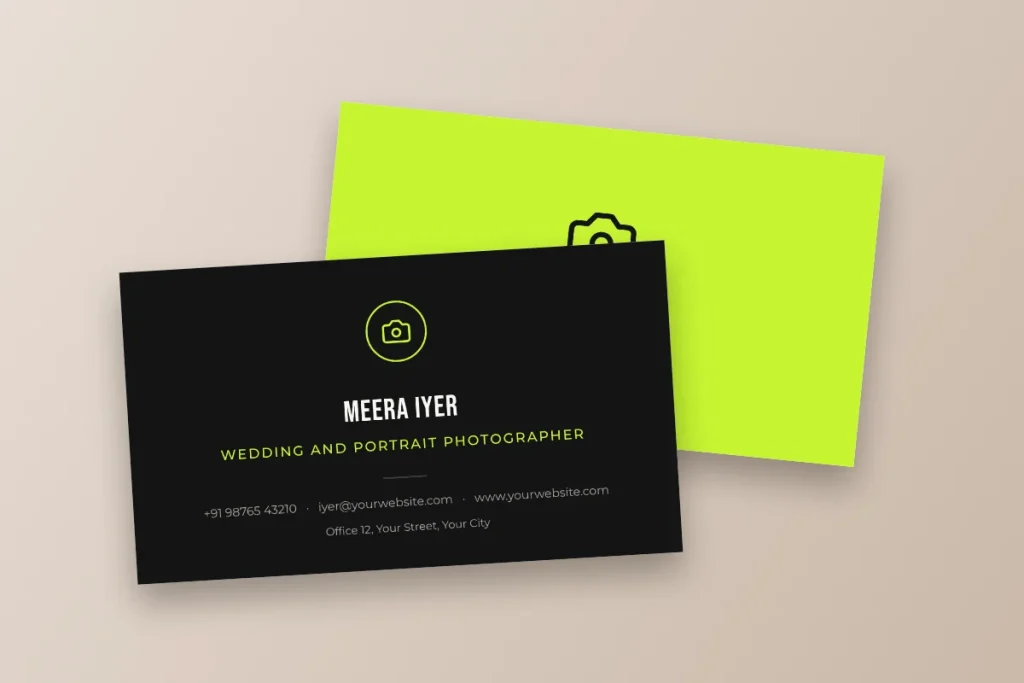
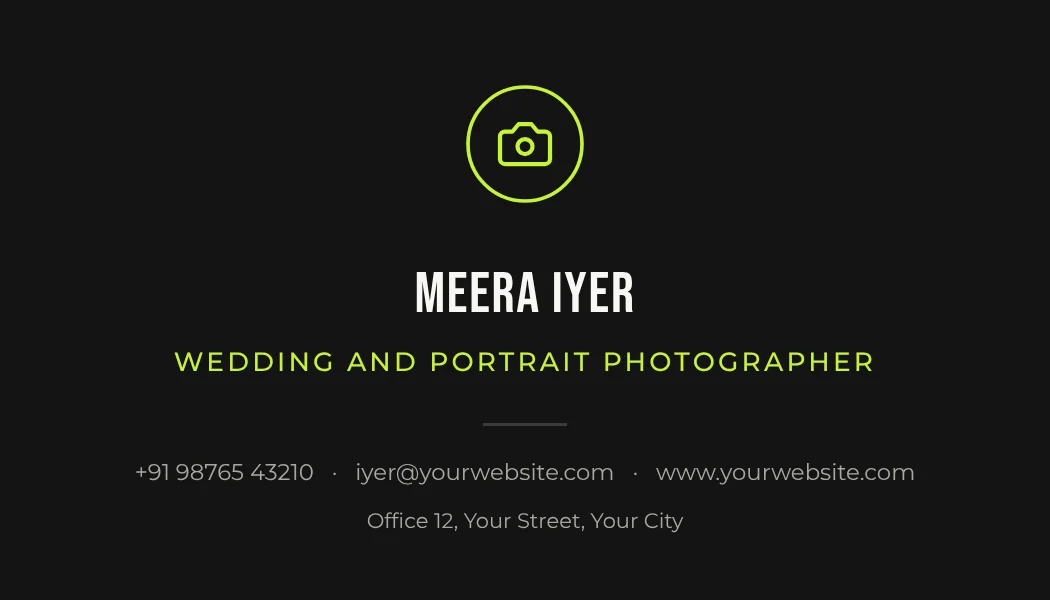
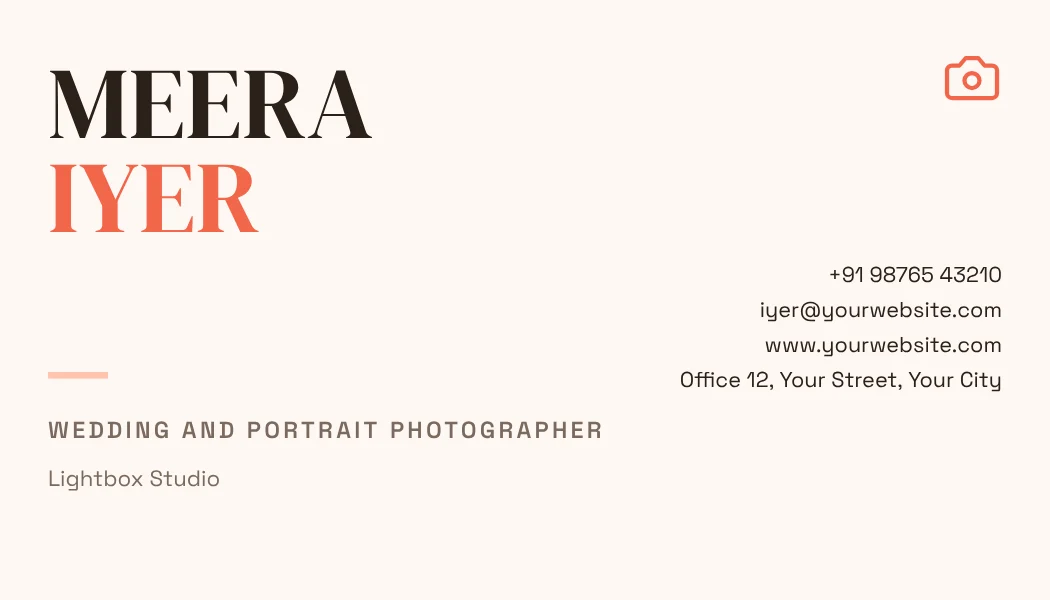
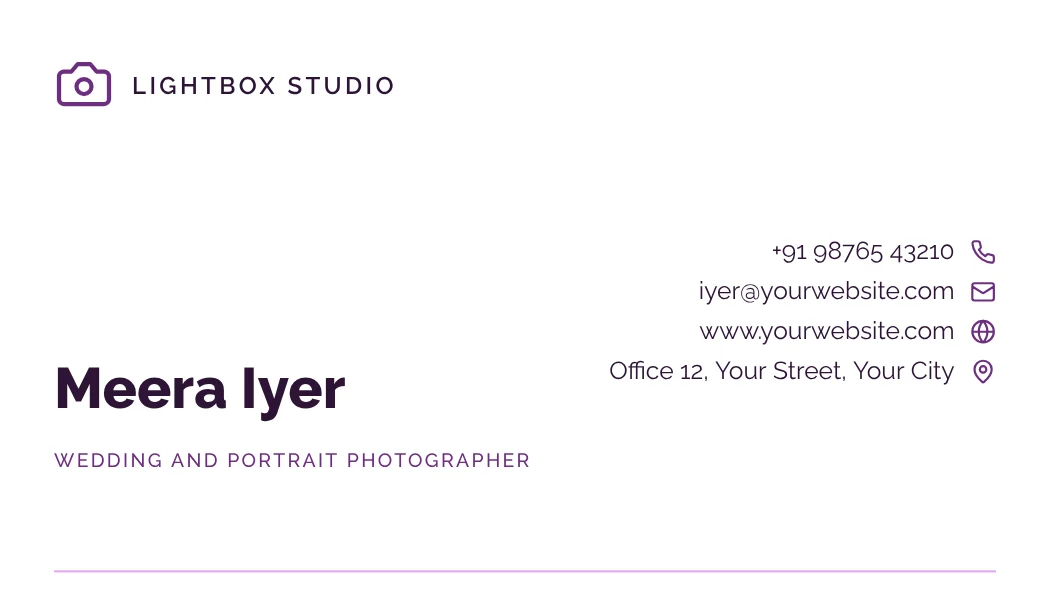
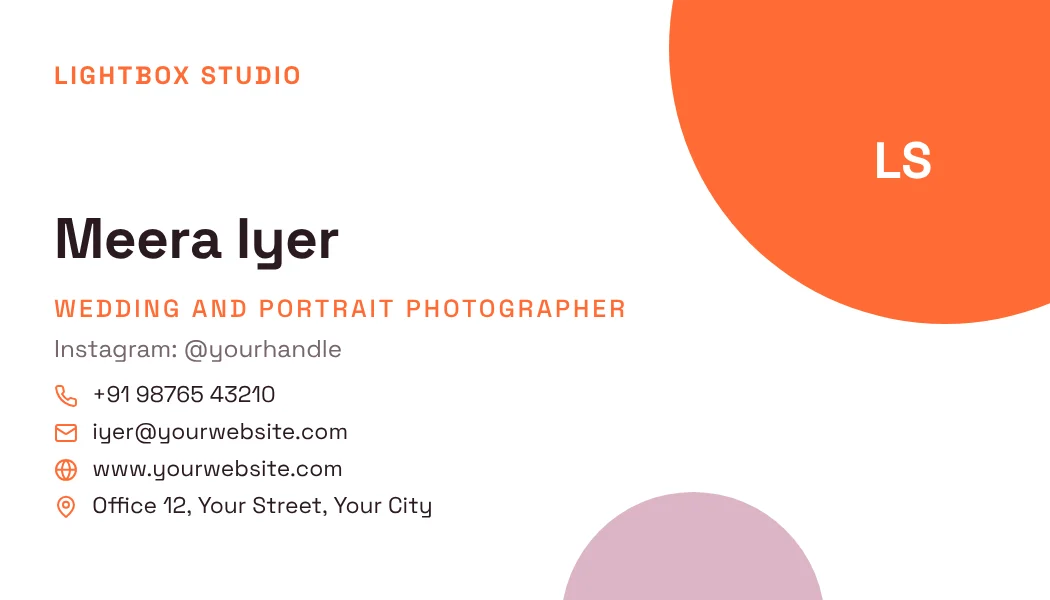
A photography visiting card needs four things: your name or studio name, what you shoot (weddings, portraits, products, events), a phone or WhatsApp number, and a QR code that opens your portfolio or Instagram. Clients hire photographers by looking at their work, so the card's real job is to get people to that work in one scan. Everything else, including the design, should stay quiet enough that your photograph is the hero. The photographer business card templates below use black, white, charcoal and warm neutral layouts with a single image area.
The templates use placeholder text and sample images. In the business card maker you can replace the text, upload your own photo and point the QR code to your own portfolio link.
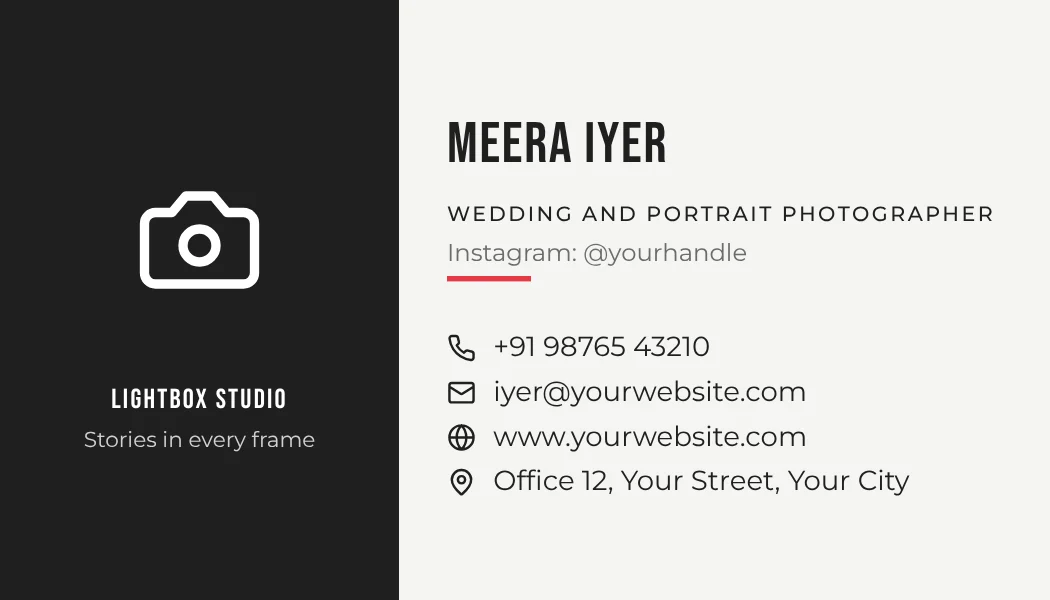
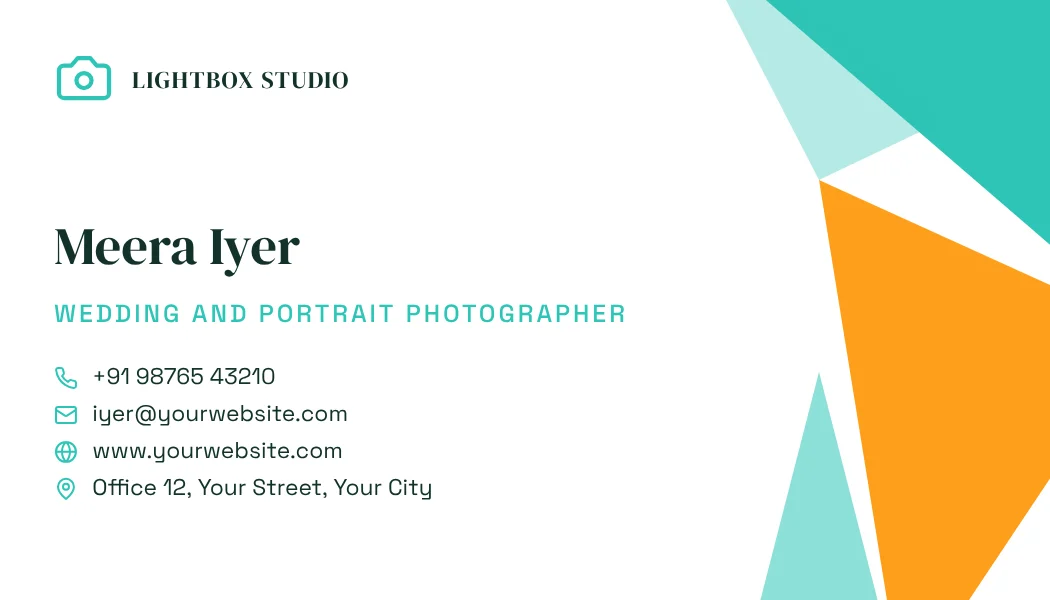
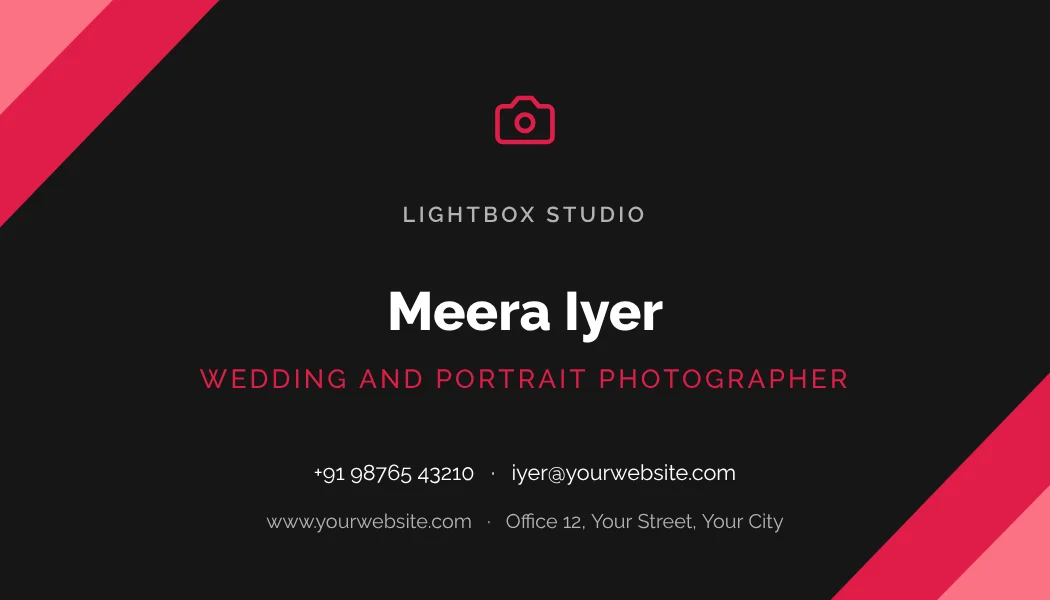
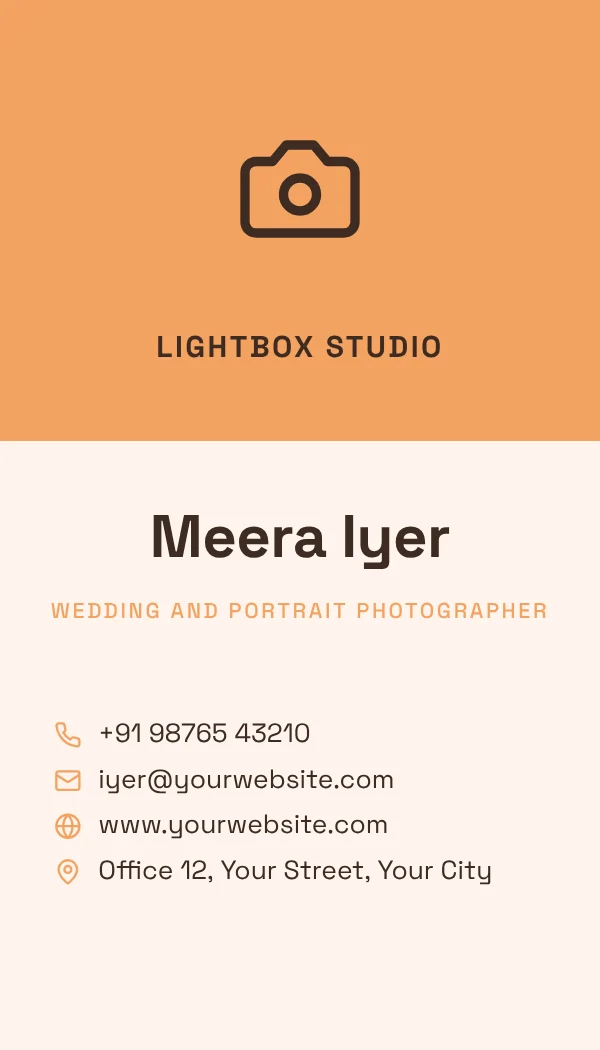
8 free photography visiting card templates
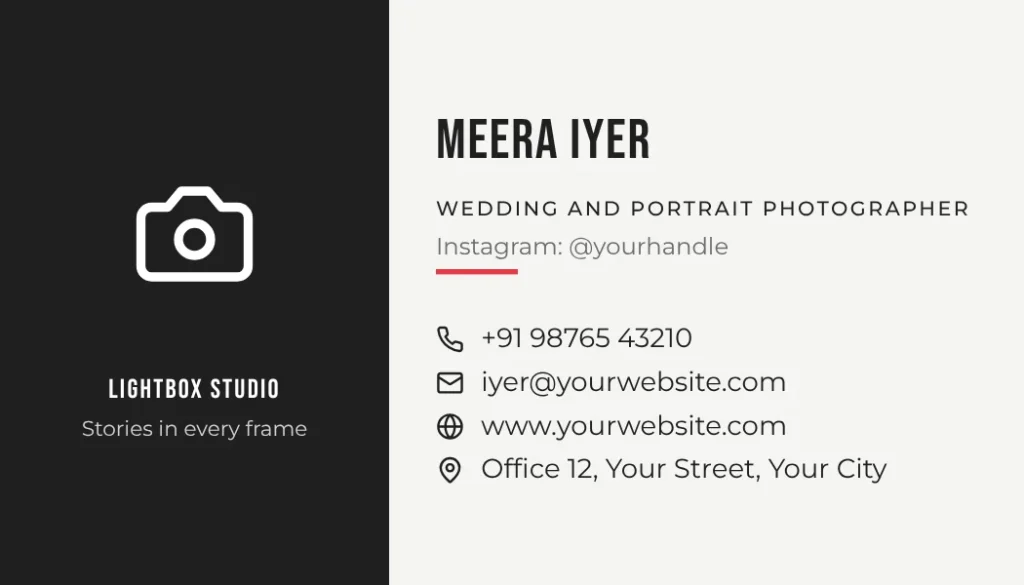
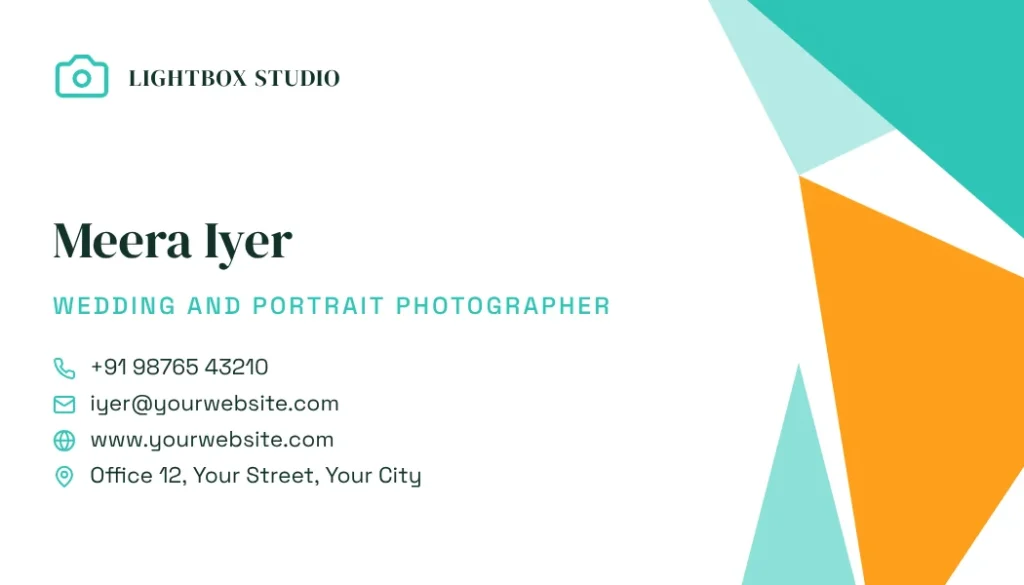
Hover or tap a card to see the back. Customize to edit and download.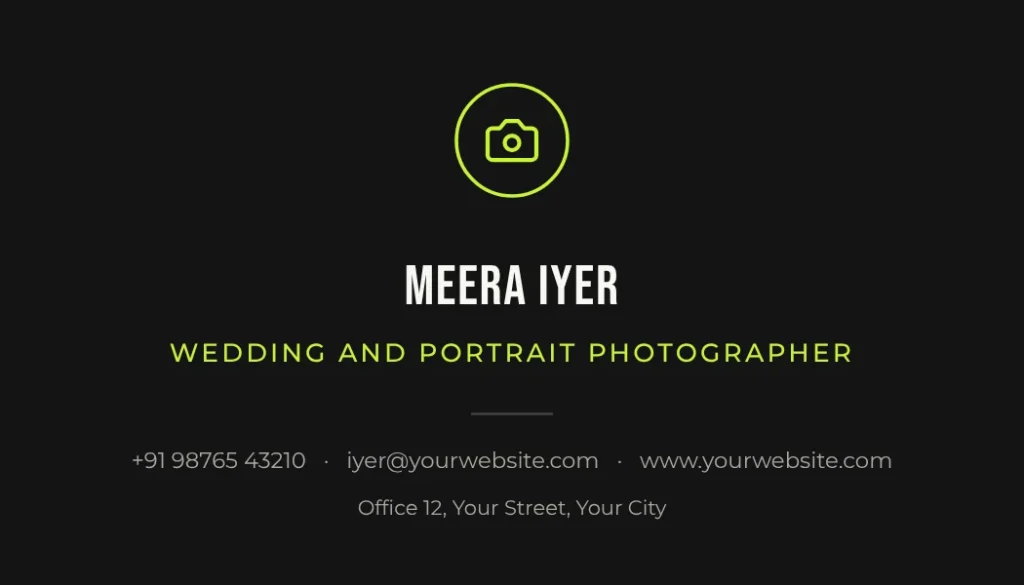
What to put on a photographer's card
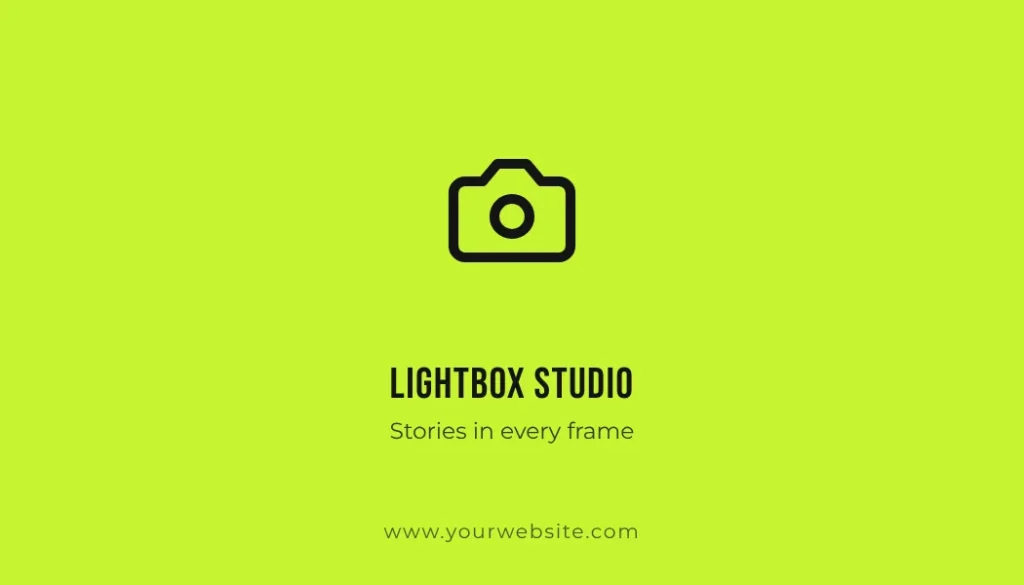
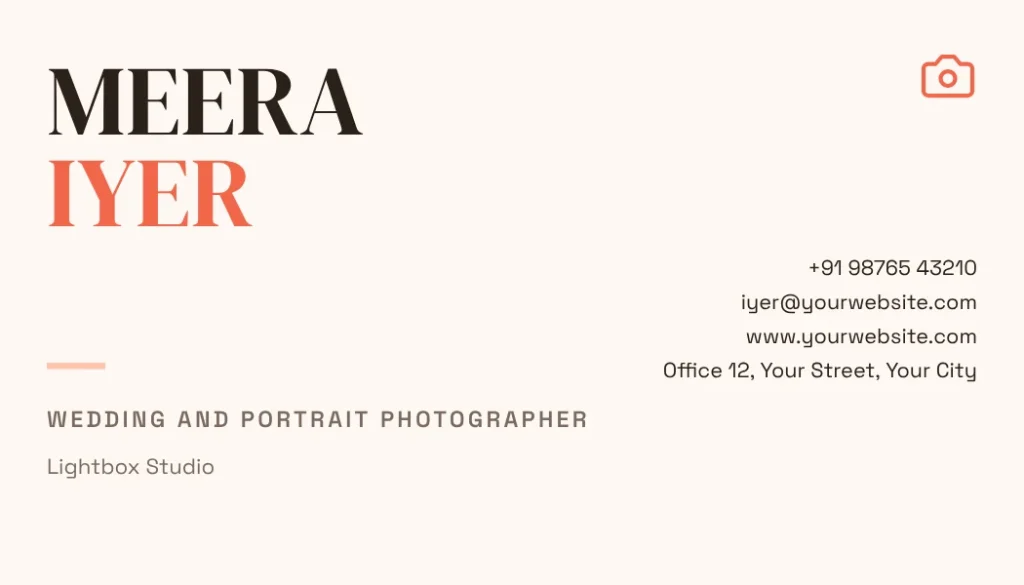
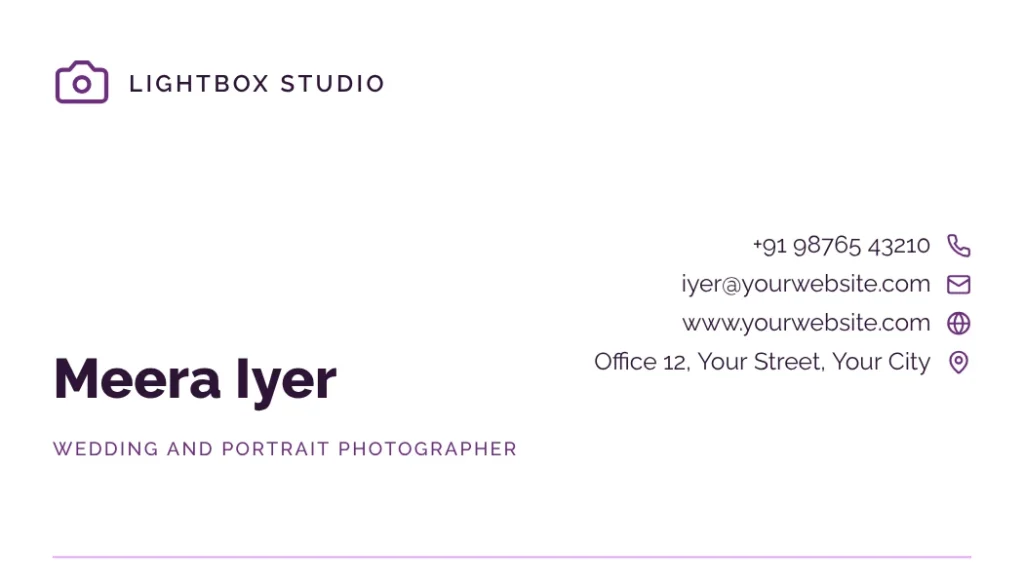
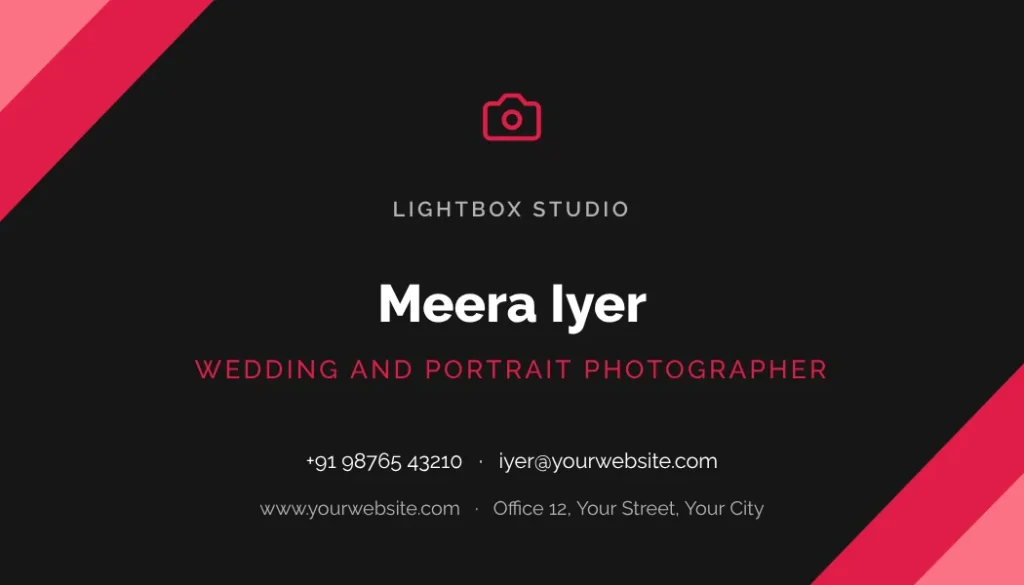
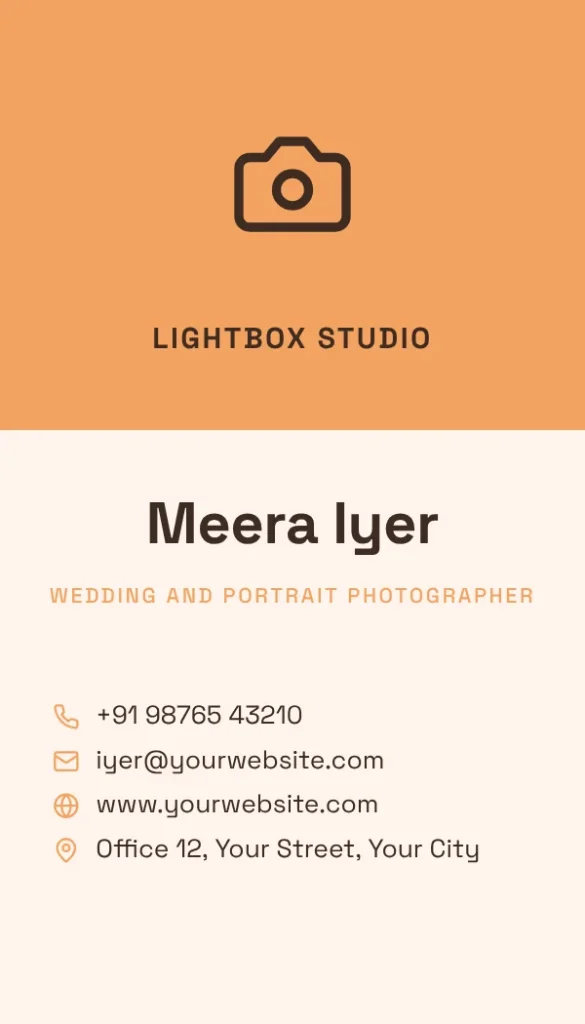
- Name or studio name: "Meera Iyer" or "Lightbox Studio". If clients book you personally, lead with your name.
- Speciality line: "Wedding and Portrait Photographer" tells people which events to call you for.
- Portfolio link: website, Instagram handle, or a portfolio page. Write it out and also encode it in a QR code.
- Phone and WhatsApp: couples and event planners usually message first.
- City and travel note: "Based in Chennai, available across India" for destination wedding shooters.
- Studio address and hours: only if you run a walk-in photo studio for passport photos and prints.
The portfolio QR code on the back
For photographers the QR code matters more than any other detail. A few rules make it scan reliably:
- Print it at least 0.8 x 0.8 in (about 2 x 2 cm), with a quiet zone (blank margin) of at least 4 modules around it.
- Use dark modules on a light background. White-on-black or a code placed over a photo often fails on older phones.
- Point it to a link you control (your own site or a link page), so you can update the portfolio without reprinting.
- Add a short label such as "Scan to see my work" so people know what it opens.
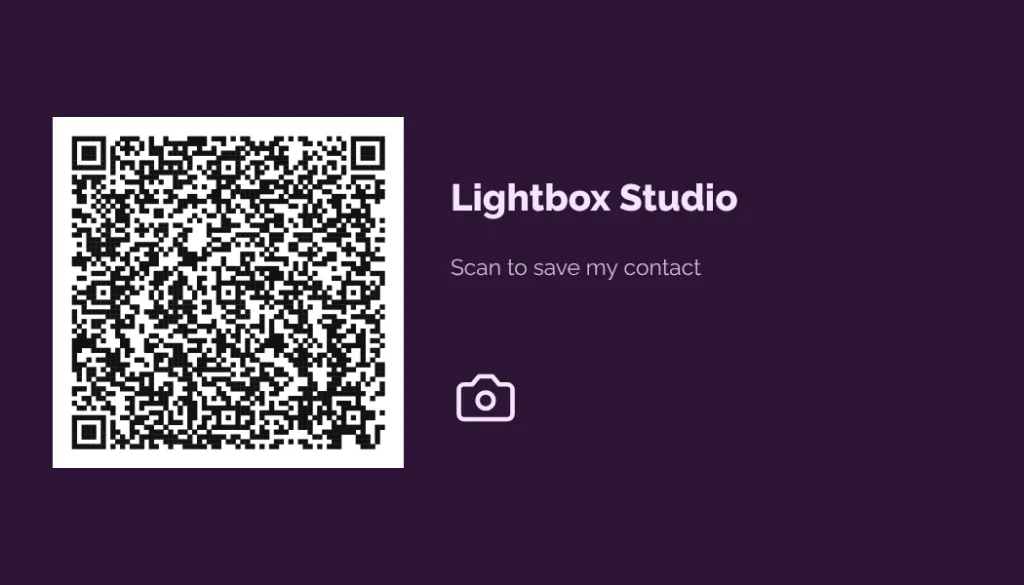
You can also add a second vCard QR so clients save your number. See the QR code business card templates for both kinds.
Using your own photo on the card
Searches for "visiting card design with photo" are common, and for photographers it makes sense. Pick one image that represents the work you want more of, not your favourite shot from a genre you are leaving behind. Practical points:
- The image must be 300 DPI at printed size. A full-bleed 3.5 x 2 in back needs 1125 x 675 px including bleed.
- Convert or proof in CMYK. Saturated screen colours (neon skies, vivid greens) can print duller because screens use RGB.
- Choose images with a calm area for text, or keep text on the other side entirely.
- Black and white images print predictably and look striking on matte stock.
Design moods by genre
- Wedding photographers: ivory or blush with a thin serif or script name, plus one candid couple frame.
- Portrait and fashion: black card, white sans-serif text, one high-contrast portrait.
- Product and commercial: clean white card, grid layout, tiny camera or aperture icon.
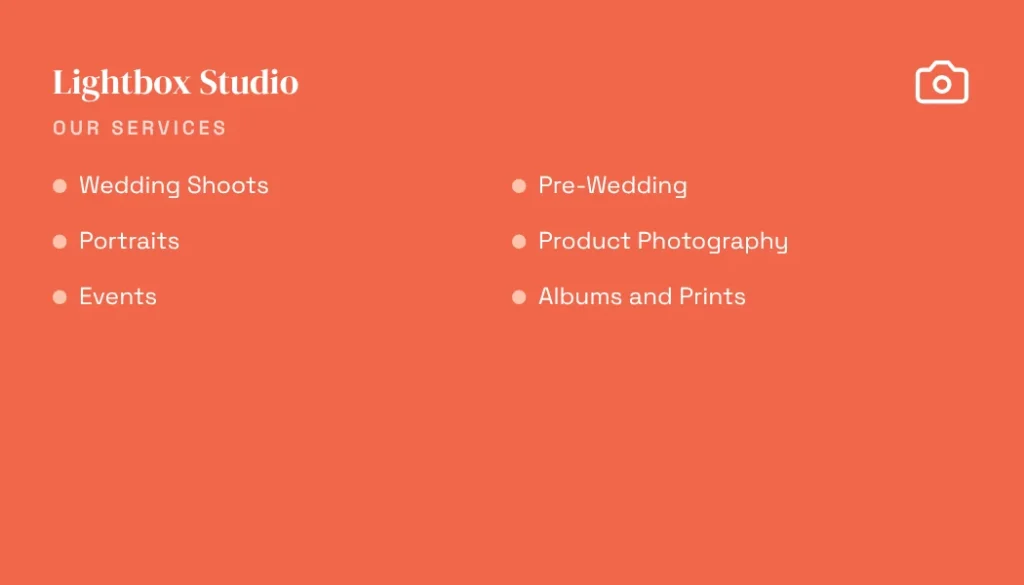
- Photo studios: a brighter colour (teal, mustard) with services listed, since walk-in customers want to know about passport photos, framing and albums.
For layouts that keep the image dominant, the minimalist and creative visiting card collections are good starting points.
Sample text layout
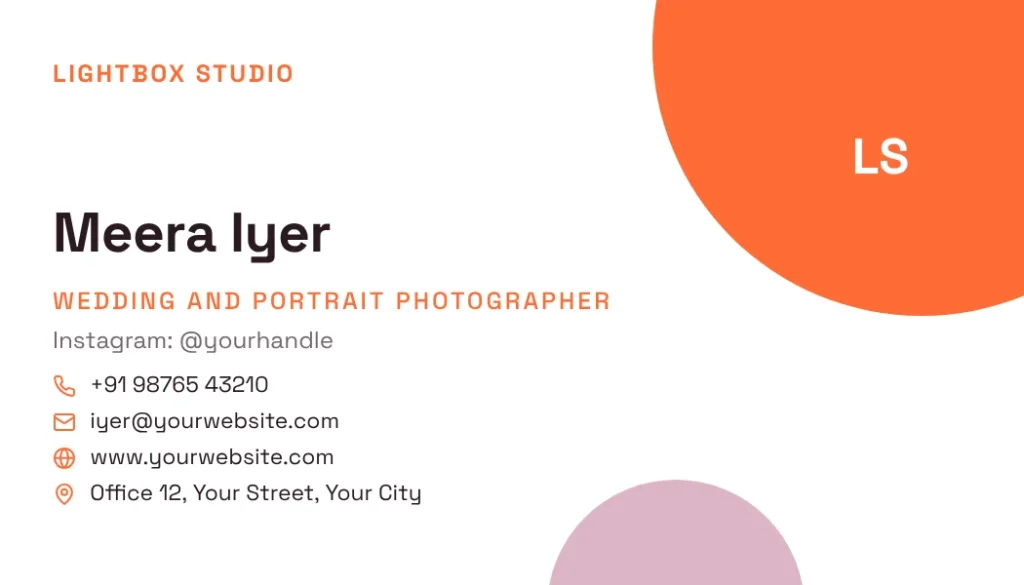
Front:
- Lightbox Studio (small, top)
- Meera Iyer
- Wedding and Portrait Photographer
- Stories in every frame
- +91 00000 00000 | Instagram: @yourhandle
- yourwebsite.example
Back: one full-bleed photograph with a white panel holding the portfolio QR and "Scan to see my work".
Printing tips for photographers
Photographers are judged on print quality, so a cheap card can undercut your work. Use thick stock (around 350 to 400 gsm, or 16 pt in the US) and ask for a proof of the image side. Matte or soft-touch finishes suit moody and black and white images; gloss makes colour images pop but shows fingerprints. In India 3.5 x 2 inches is the most common size and some printers use 91 x 55 mm; in the US the standard is 3.5 x 2 in. Check the business card size guide before you crop your photo, and keep text 0.125 in inside the trim line.
Frequently asked questions
What should be written on a photography visiting card?
Your name or studio name, the type of photography you do, phone or WhatsApp, email, your website or Instagram handle, and your city. Add a QR code that opens your portfolio. Walk-in studios should also list services such as passport photos, albums and framing, along with the address and opening hours.
Should a photographer put a photo on the visiting card?
Usually yes, but only one, and only work that represents what you want to be hired for. Put it on the back so the front stays readable. Make sure it is 300 DPI at the printed size and proof it in CMYK, because bright screen colours can print duller than you expect.
What size should my photo be for a visiting card?
For a 3.5 x 2 inch card at 300 DPI, the trimmed image is 1050 x 600 px, and 1125 x 675 px if it runs into the 0.125 in bleed. For metric sizes such as 91 x 55 mm, work out the size at 300 DPI and add your printer's bleed.
Where should the QR code go on a photographer's card?
Most photographers put it on the back, on a plain light panel rather than directly over a photograph. Print it at least 0.8 x 0.8 in with a quiet zone of at least 4 modules. Link it to your own portfolio page so you can change the work it shows without reprinting cards.
Is there a photo studio visiting card design?
Yes. Studio cards follow the same layout but add the shop address, timings and a list of services like passport photos, studio portraits, albums and video. Brighter colours and a camera icon work well for walk-in studios, while freelance photographers usually prefer a quieter, image-led card.
Sources
More templates
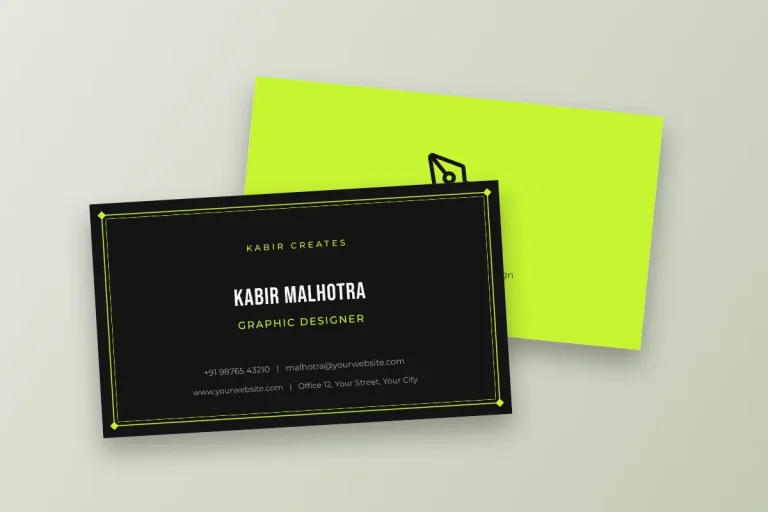
 Graphic Designer Visiting Card DesignGrid-based, type-led visiting card templates for graphic designers. Treat the card as your smallest portfolio...
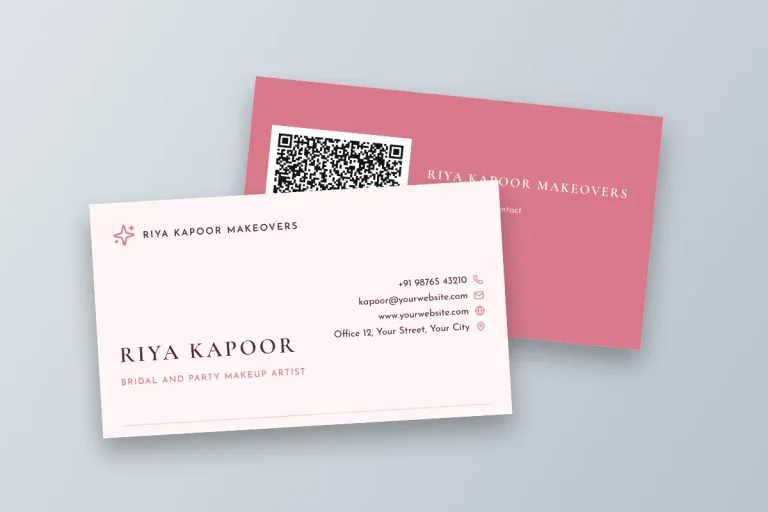
- Makeup Artist Visiting CardElegant visiting card designs for freelance bridal and party makeup artists, built around your Instagram. Add...
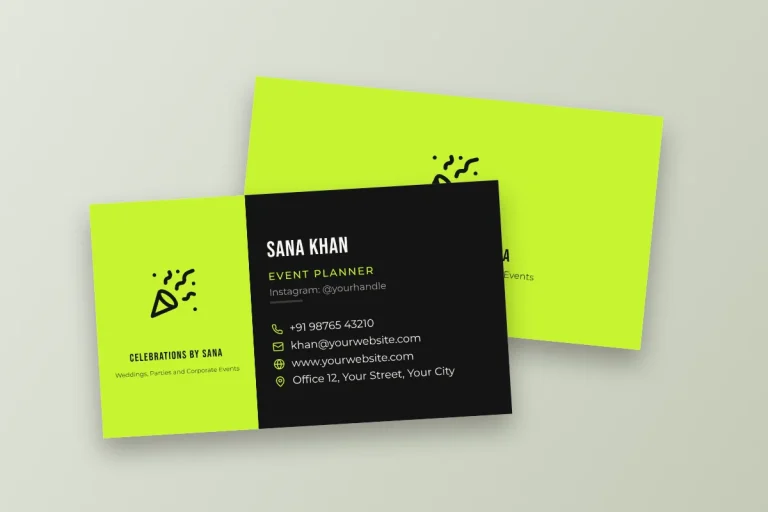
- Event Management Visiting CardBuild an event management visiting card that looks like one of your own celebrations: festive, organised and...
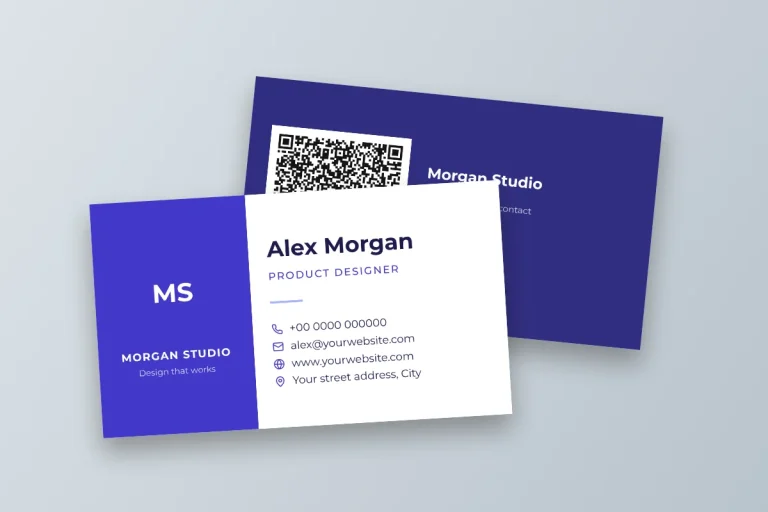
- QR Code Business Card TemplatesA QR code business card lets people scan the back of your card and save your name, phone and email straight...