Visiting Card for Pandit Ji: Free Puja, Jyotish and Astrologer Card Designs
Saffron, maroon and gold visiting card designs for pandits, purohits and jyotish practitioners, in Hindi, English or both. List your pujas on the back and download a print-ready file for free.
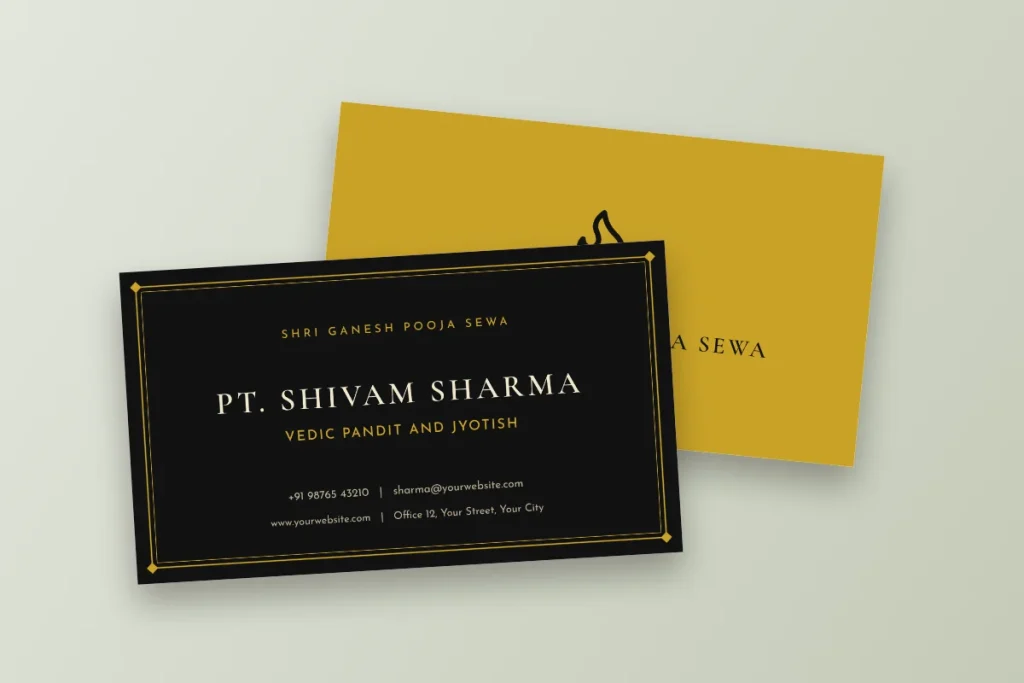
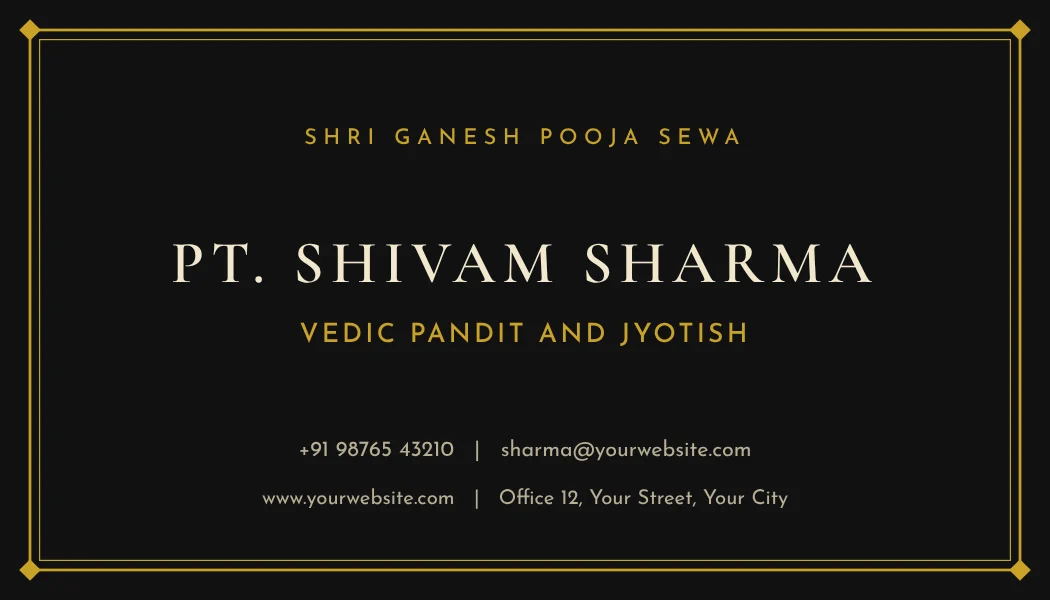
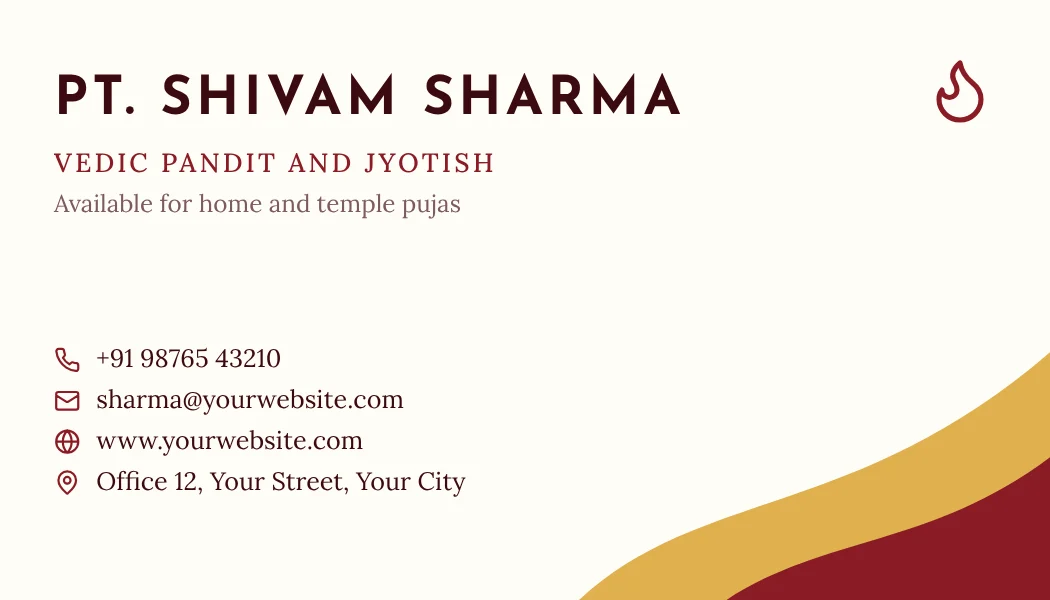
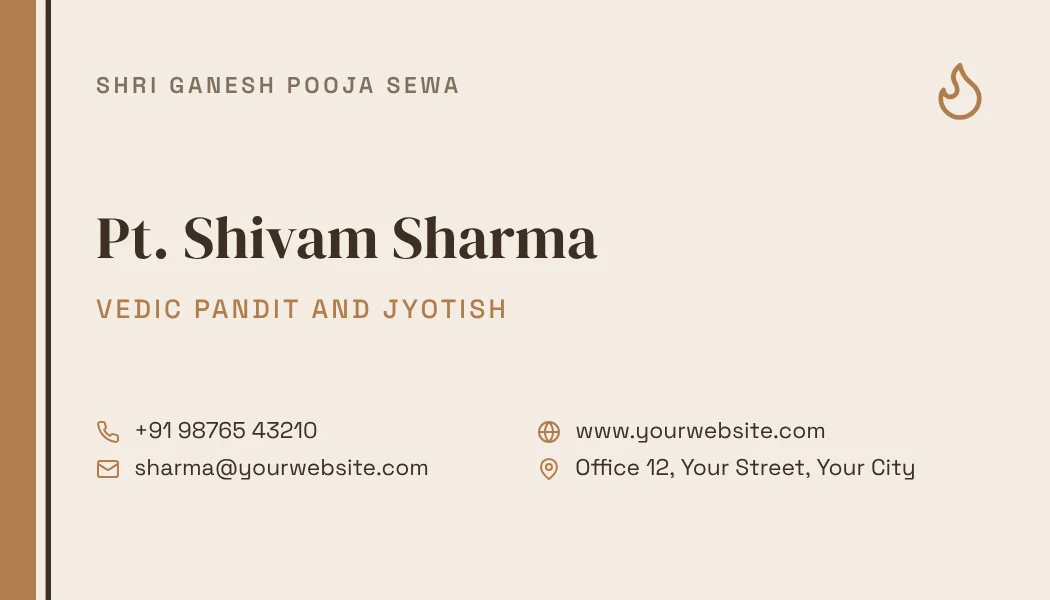
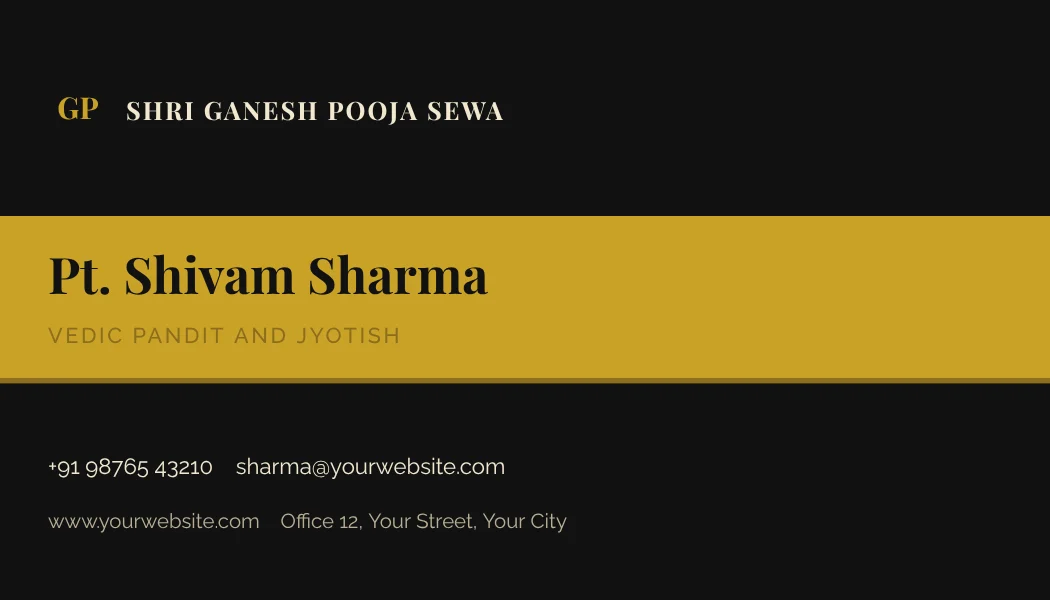
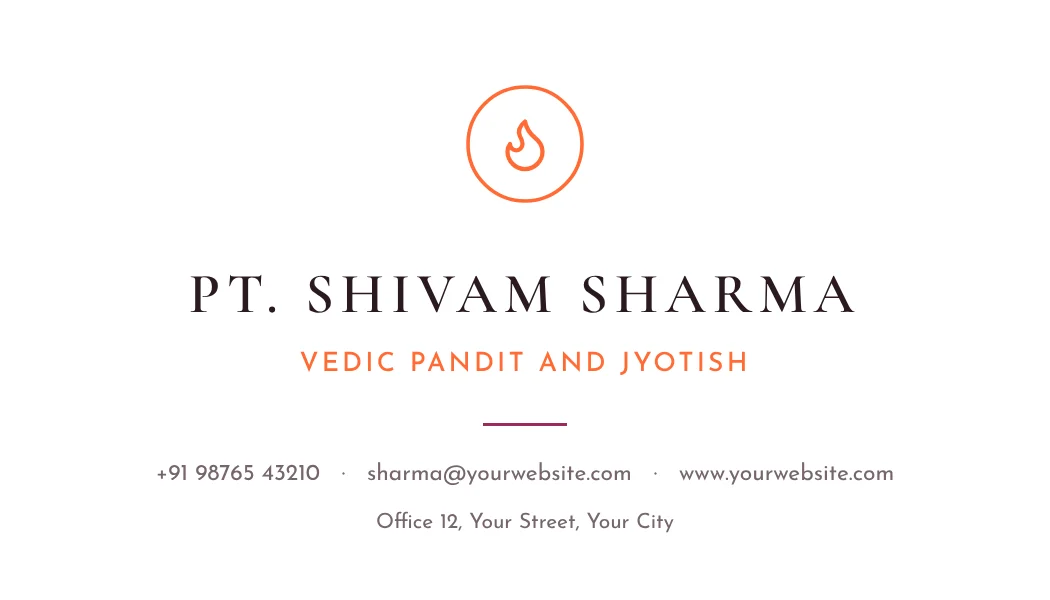
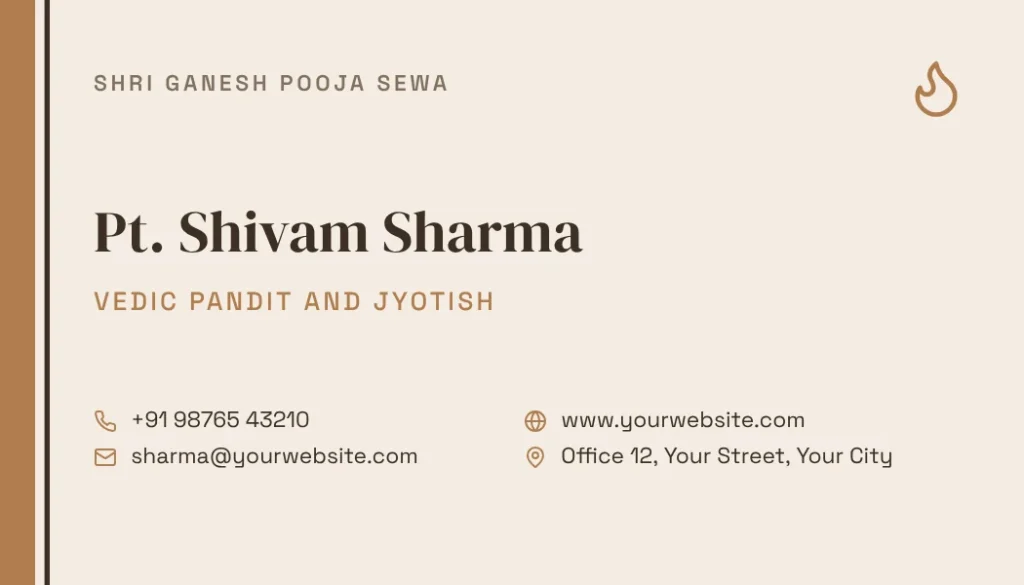
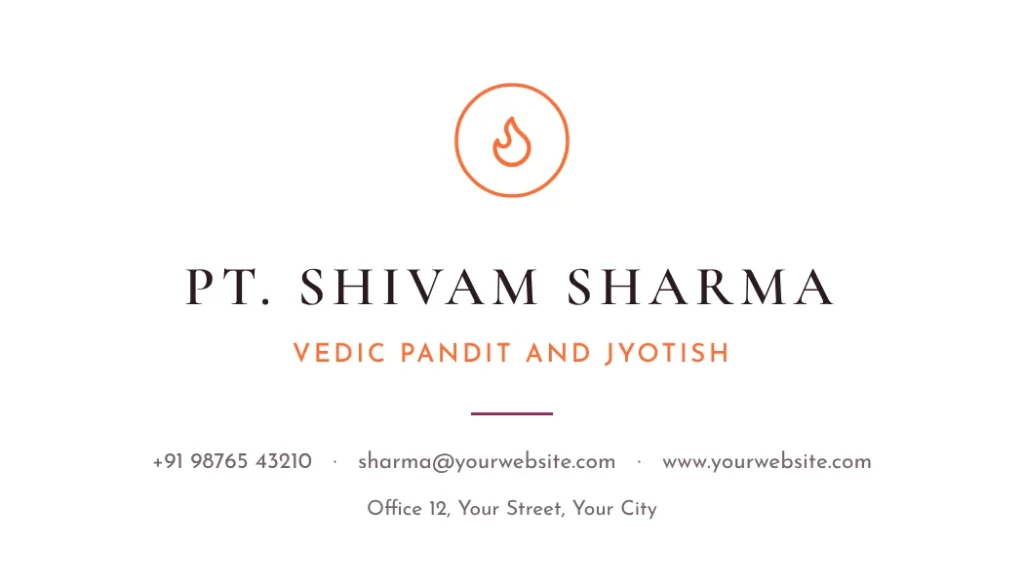
A visiting card for a pandit should show your name with "Pt." or "Pandit", what you perform (pujas, havan, sanskar, jyotish), the areas you travel to, and a mobile and WhatsApp number, ideally in Hindi as well as English. Most bookings for a pandit ji come by phone after a family passes the card along, so the puja list and number must be easy to read at a glance. The templates below use saffron, maroon, red and gold, with Om, diya, kalash and swastik motifs.
Each design uses placeholder details (sample name, dummy number, made-up seva name). Change them in the free card maker, which supports Hindi and Gujarati text, and download.
8 free visiting card for pandit templates
Hover or tap a card to see the back. Customize to edit and download.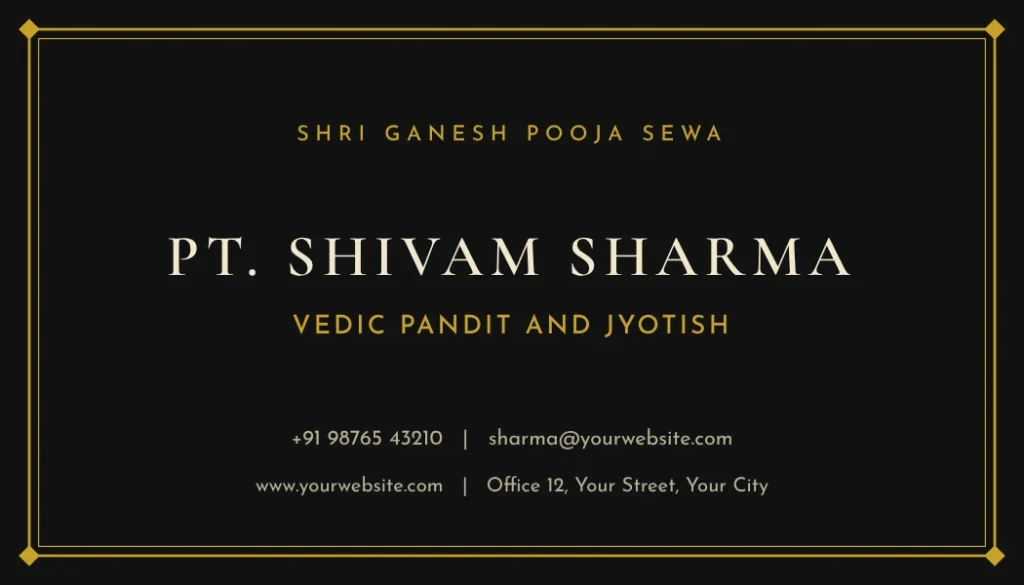

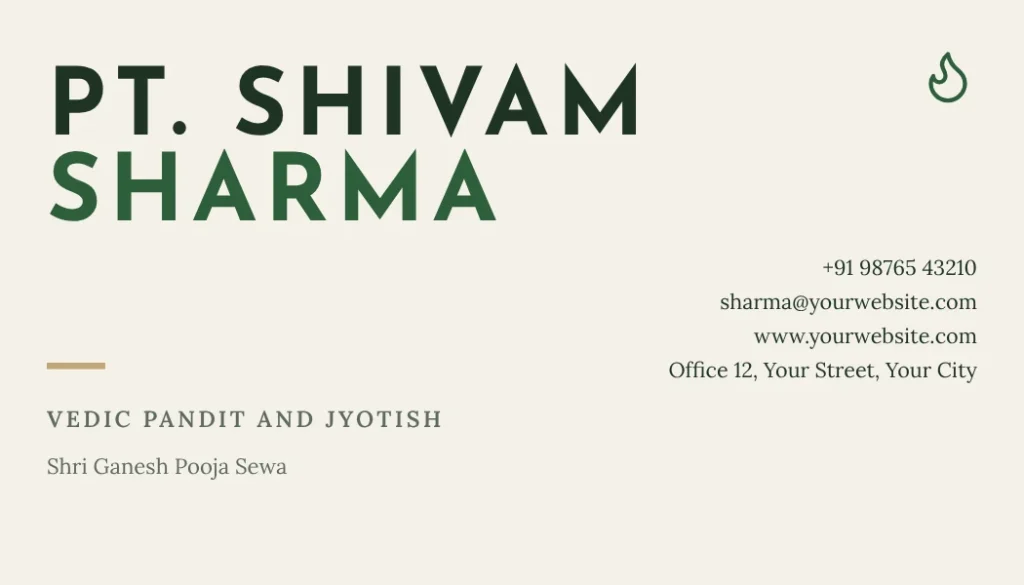
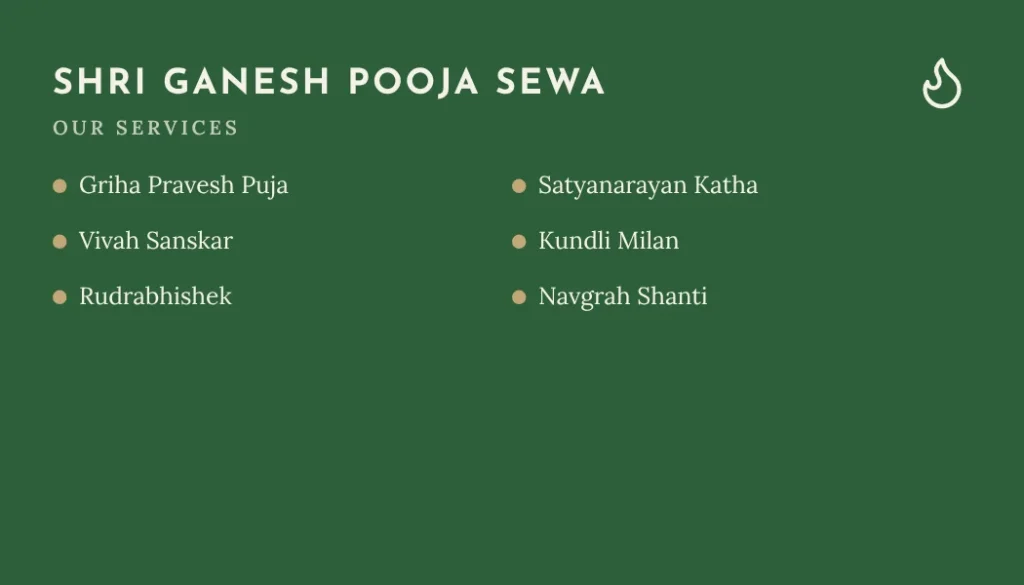
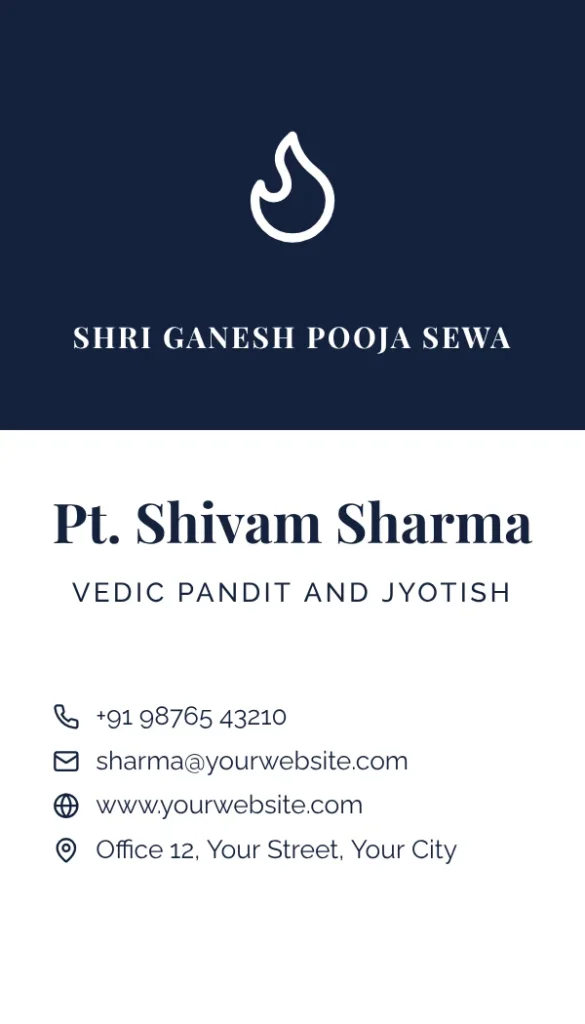
What a pandit ji ka visiting card should say
- Name with title: "Pt. Shivam Sharma" or "Acharya", "Shastri", "Jyotishacharya" if that is your earned title.
- What you do: "Vedic Pandit and Jyotish", "Karmkand Visheshagya" or "Purohit".
- Seva or sansthan name: such as "Shri Ganesh Pooja Sewa".
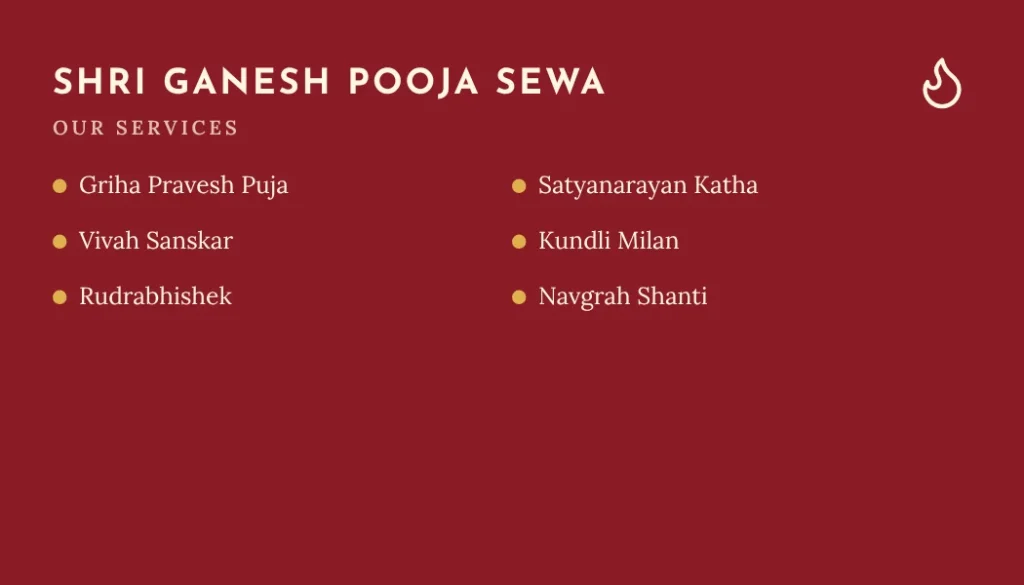
- Main pujas: Griha Pravesh, Satyanarayan Katha, Vivah Sanskar, Rudrabhishek, Navgrah Shanti, Kundli Milan.
- Areas served: city and nearby towns, "home and temple pujas", or "available for outstation".
- Contact: mobile plus a WhatsApp icon. Families like to send dates and birth details by WhatsApp.
- Temple address: if you are attached to a mandir, give it as your address.
Hindi, English or bilingual?
Bilingual cards are the most popular choice for pandits. A common pattern puts a shloka or "Shri Ganeshaya Namah" at the top in Devanagari, your name in both scripts, and the puja list in Hindi on the back. If many of your clients are Gujarati families, the maker also supports Gujarati text. Tips for mixed scripts:
- Use one Devanagari font and one Latin font; more looks cluttered.
- Devanagari needs slightly more line height than English because of the matras above and below the line.
- Keep small Hindi text at 8 pt or larger; complex conjuncts blur at tiny sizes.
- Proofread Sanskrit spellings carefully, since a wrong matra in a mantra is noticed quickly by devotees.
Colours and motifs
Traditional cards use colours tied to puja and festivals:
- Saffron and maroon: the classic combination, warm and devotional.
- Red and gold: festive, good for vivah sanskar specialists.
- Deep yellow with brown text: soft and readable, suits Satyanarayan and katha vachak cards.
- Navy with gold stars: a calmer option for jyotish and kundli work.
Motifs: Om, diya, kalash, bell, lotus, a Ganesha line drawing, or a zodiac wheel for astrologers. Keep the motif in one corner or as a faint watermark so the text stays legible. Browse visiting card backgrounds for saffron and mandala textures you can apply in the maker.
Back-side ideas
- Full puja list: two columns of six to ten pujas and sanskars.
- Jyotish services: kundli banana, kundli milan, muhurat, vastu consultation.
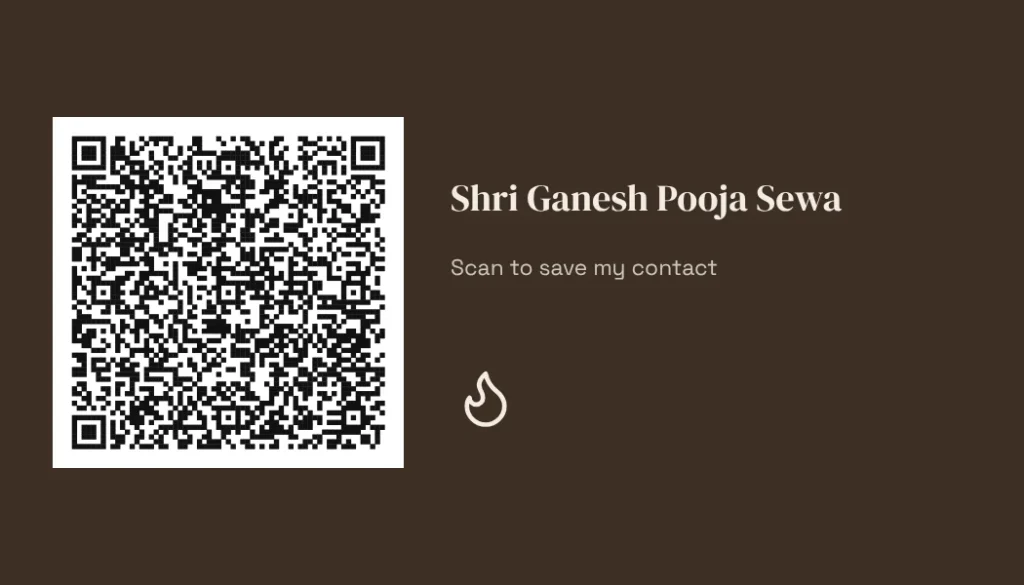
- Contact QR: a vCard QR code that saves your name and number, printed at least 0.8 x 0.8 in (about 2 x 2 cm).
- Auspicious line: a short blessing or shloka centred on a plain saffron back.
Avoid promising results (such as guaranteed marriage or job success); a list of services reads more trustworthy than claims.
Sample text layout
Front:
- Shri Ganeshaya Namah (top, small)
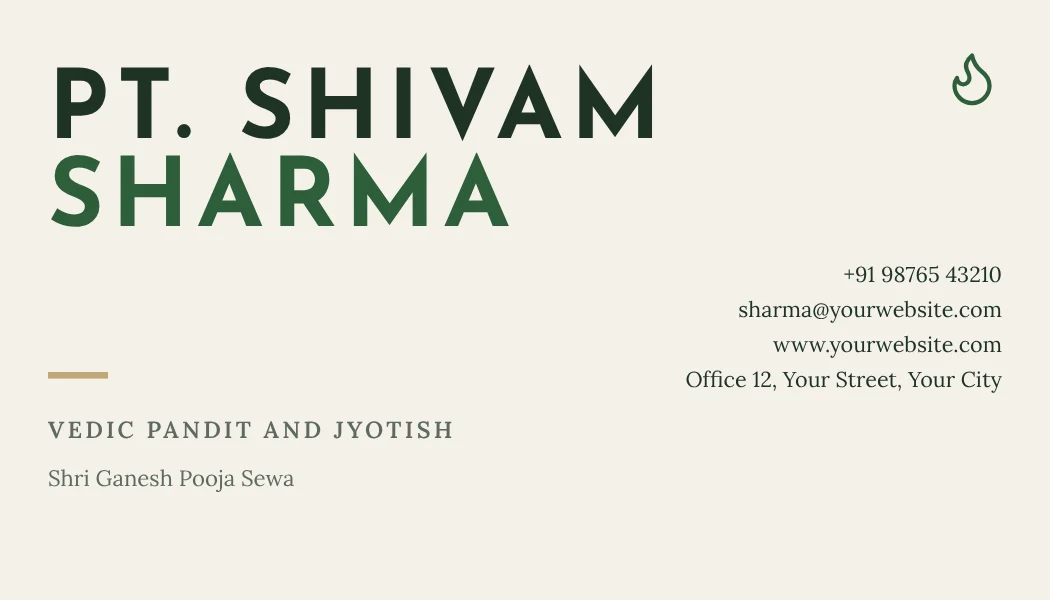
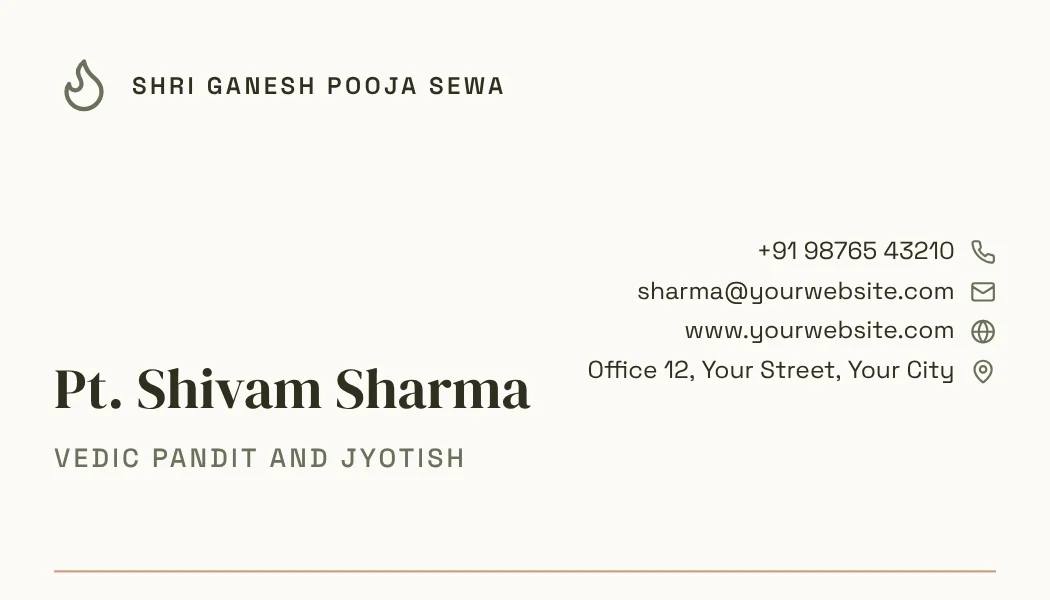
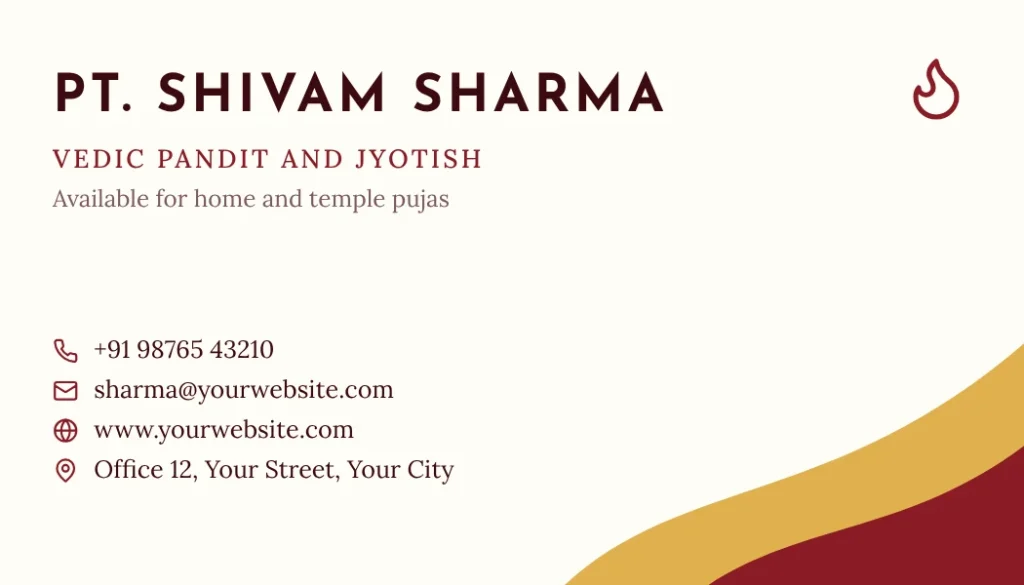
- Pt. Shivam Sharma
- Vedic Pandit and Jyotish
- Shri Ganesh Pooja Sewa
- All Pujas, Havan and Sanskar
- Available for home and temple pujas
- Mobile and WhatsApp: +91 00000 00000
- Area: City and nearby towns
Back: puja list in Hindi, two columns.
Printing tips
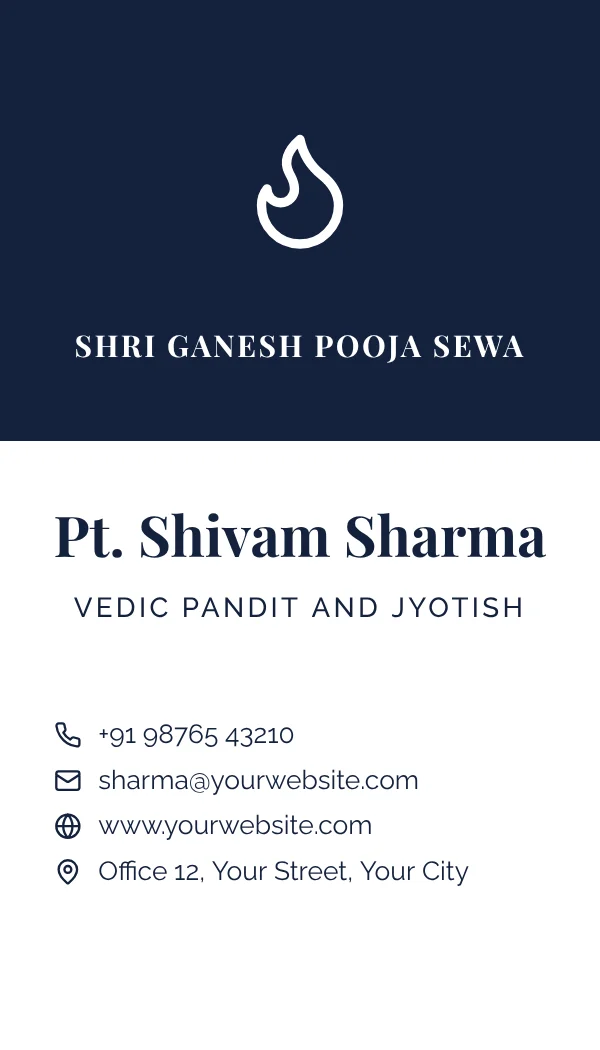
Most Indian printers use 3.5 x 2 inches; some use 91 x 55 mm, so ask before ordering (see the visiting card size guide). Saffron and gold are colours that shift a lot between screen and paper: bright RGB orange often prints duller, so ask the printer for a proof, and remember that true metallic gold needs foil, not yellow ink. A vertical card layout suits a deity image or Om at the top with text below. Matte card stock gives a softer, more traditional feel than gloss.
Frequently asked questions
What should be written on a pandit visiting card?
Write your name with Pt. or your title, what you perform (pujas, havan, sanskar, jyotish), your seva or temple name, the areas you serve, and a mobile and WhatsApp number. Put a list of main pujas on the back. Many pandits add a short invocation such as Shri Ganeshaya Namah at the top.
Can I make a pandit visiting card in Hindi?
Yes. The card maker supports Hindi and Gujarati text, so you can write your name, services and puja list in Devanagari, English or both. Bilingual cards are common because they serve both older families and younger clients who prefer English. Keep Hindi text at 8 pt or larger so it prints clearly.
Which colours suit a pandit ji visiting card?
Saffron with maroon is the classic choice. Red and gold suit vivah specialists, deep yellow with brown is soft and readable, and navy with gold works for astrologers. Keep the background light enough behind text, or use white text on a dark maroon panel, so the phone number is easy to read.
What should an astrologer put on a visiting card?
An astrologer should list name and title, the system practised (Vedic jyotish, KP, numerology), services such as kundli, matching and muhurat, consultation timings, whether phone or video consultations are offered, and a WhatsApp number. A zodiac wheel or navagraha motif identifies the profession without crowding the text.
Can I download a pandit visiting card design for free?
Yes. Pick any template here, open it in the free maker, replace the sample name and number, add your puja list, and download a print-ready PDF with bleed, a PNG to share on WhatsApp, or a 10-up sheet for printing several cards at once.
More templates
 Event Management Visiting CardBuild an event management visiting card that looks like one of your own celebrations: festive, organised and...
- Catering Visiting Card DesignDesign a catering visiting card that answers a host's first questions: what food you serve, for how many...
- Visiting Card Colour Combinations That WorkFifteen visiting card colour combinations used in our templates, with hex codes you can copy, plus which...
- Vertical Business Card TemplatesA vertical business card is the standard card turned on its side: 2 x 3.5 in instead of 3.5 x 2 in. It stands...