Catering Visiting Card Design: Free Caterers Business Card Templates
Design a catering visiting card that answers a host's first questions: what food you serve, for how many guests, which occasions, and whether you hold an FSSAI licence.
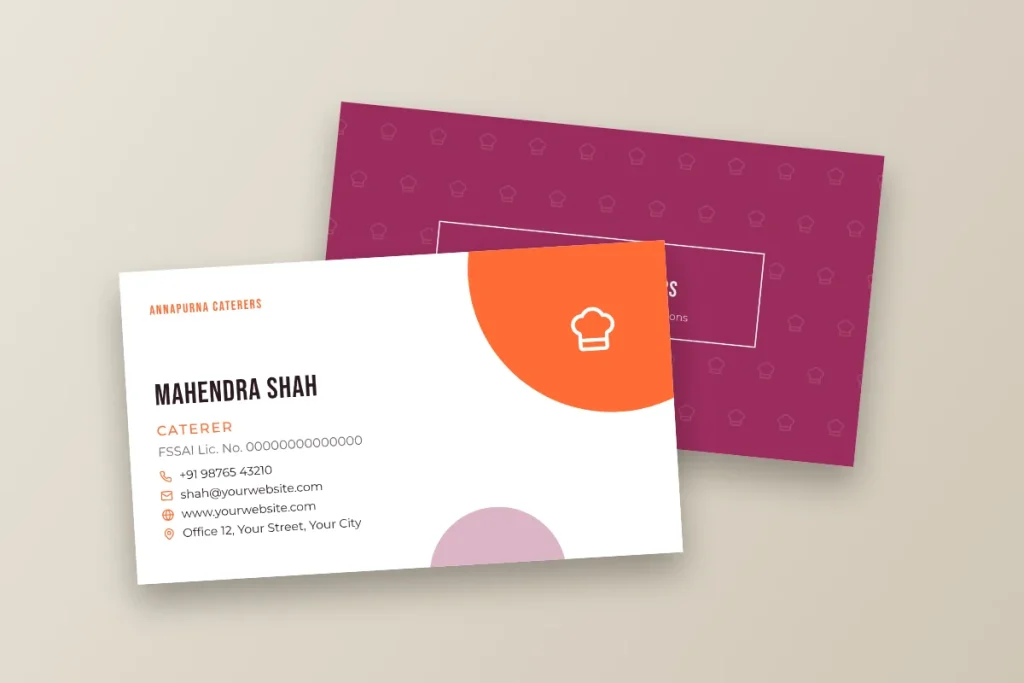
A catering visiting card is usually picked up from the buffet counter at a wedding or a puja, by a guest who just enjoyed the food. Within a few seconds that guest wants to know whether you do pure veg or Jain food, whether you can handle their guest count, and which number to call. The FSSAI licence number, printed by many caterers, adds reassurance about hygiene and registration.
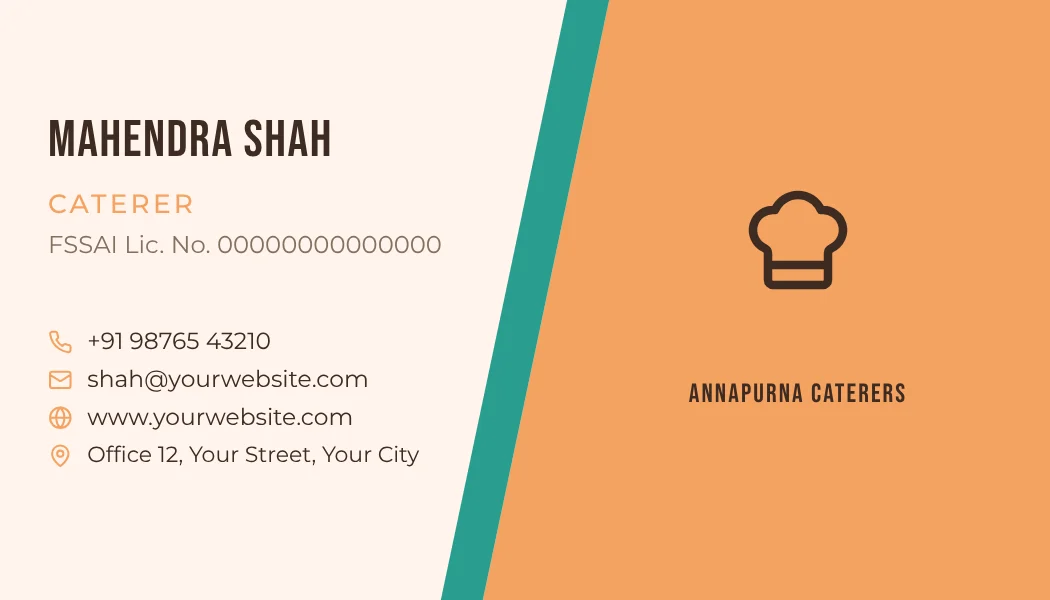
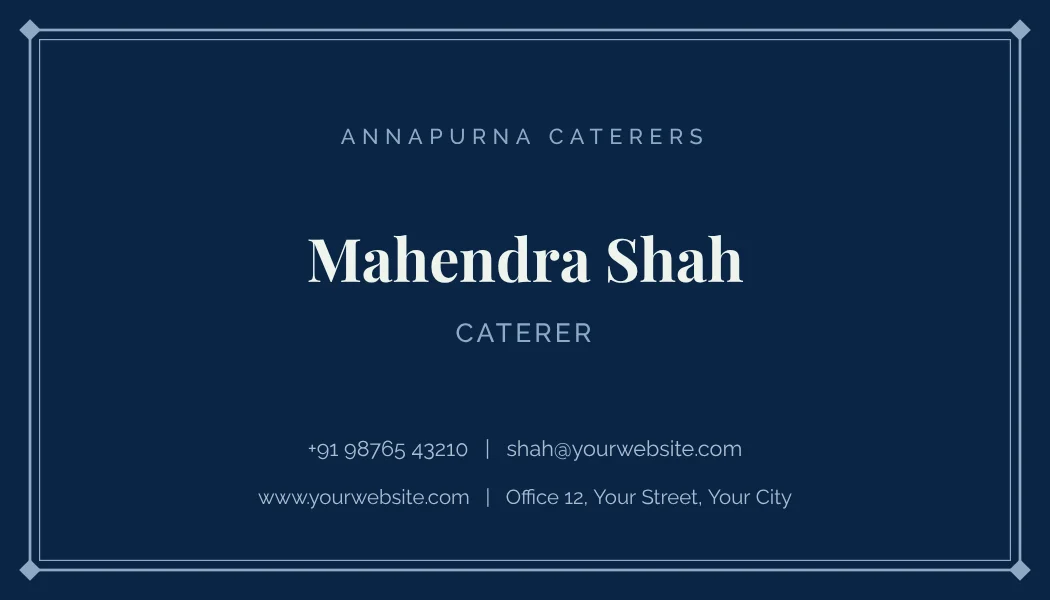
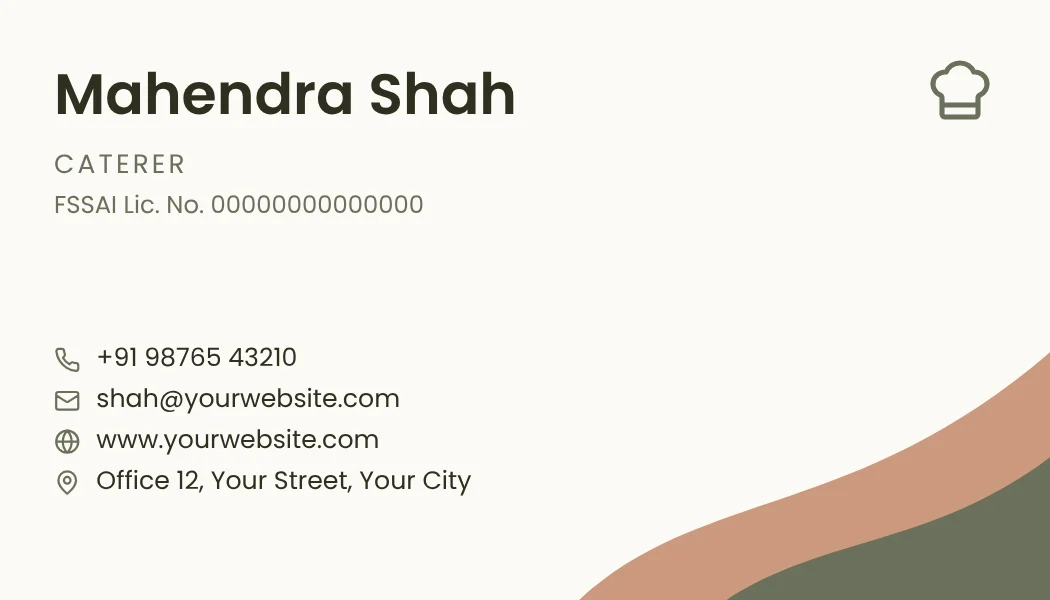
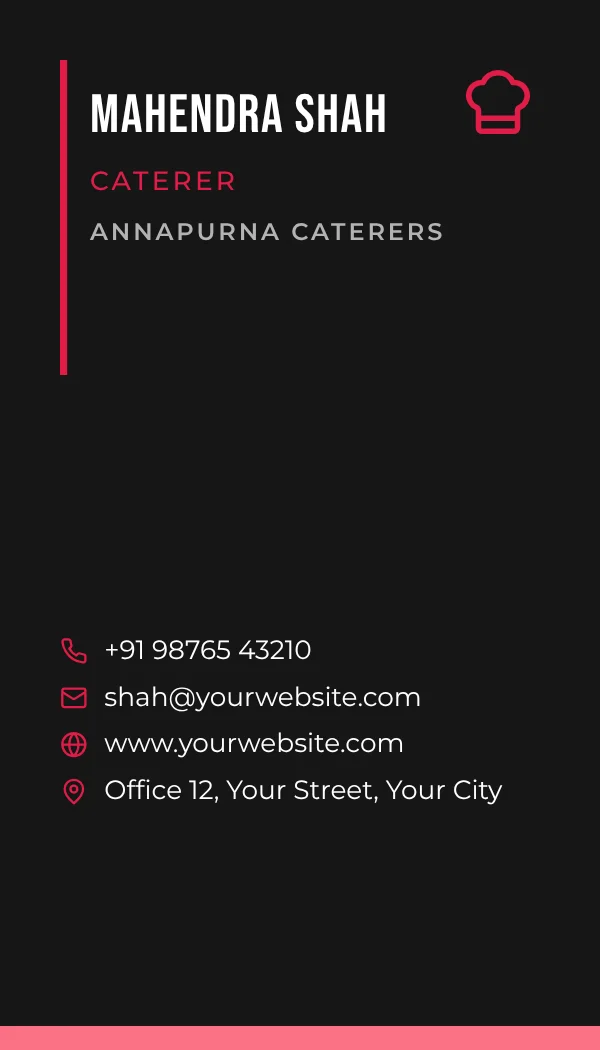
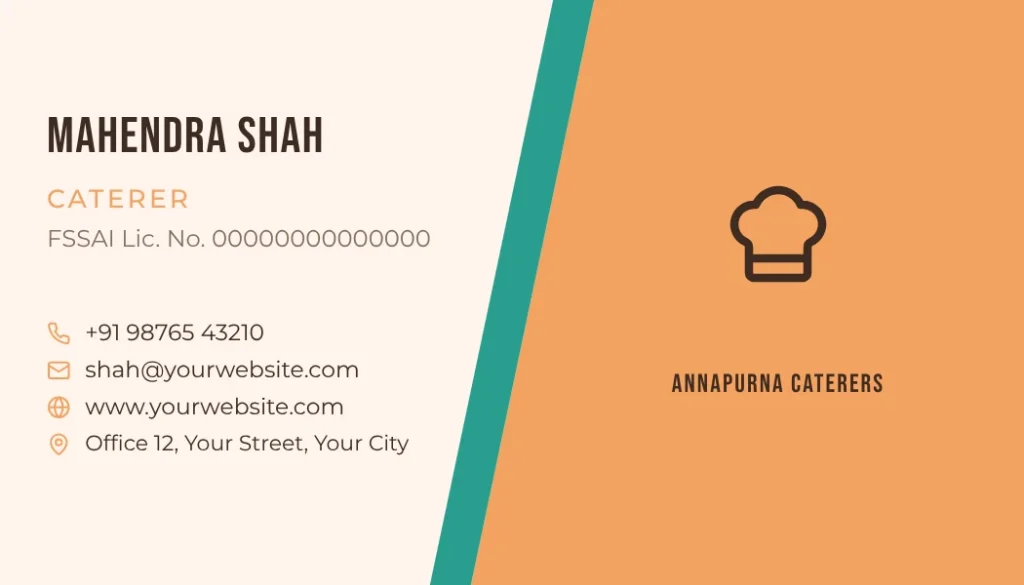
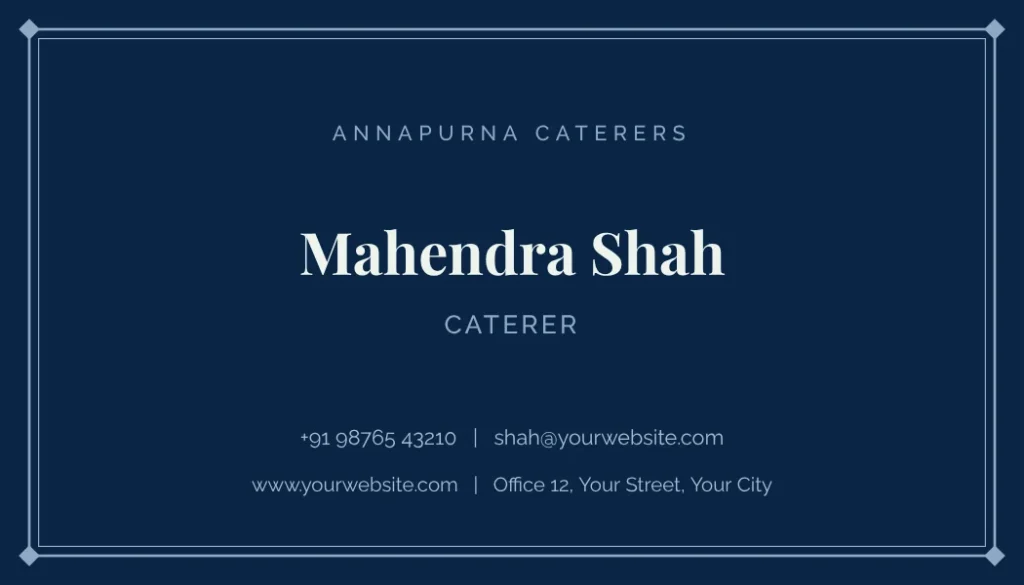
These designs suit Indian caterers, tiffin services, live counter specialists and outdoor catering teams. Each one uses placeholder details such as "Annapurna Caterers" and a dummy FSSAI number; replace them in the free card maker.
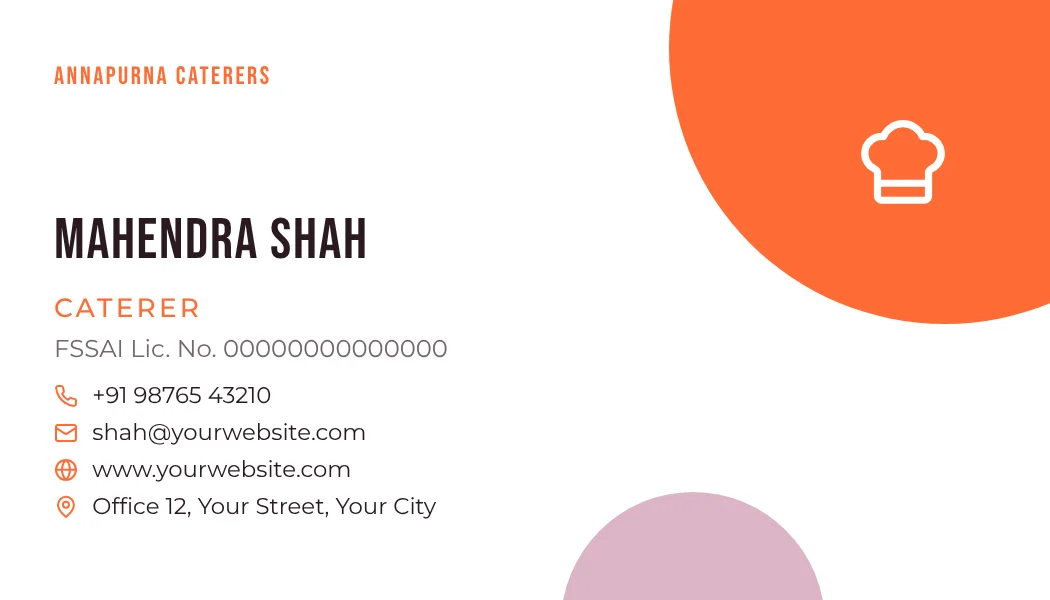
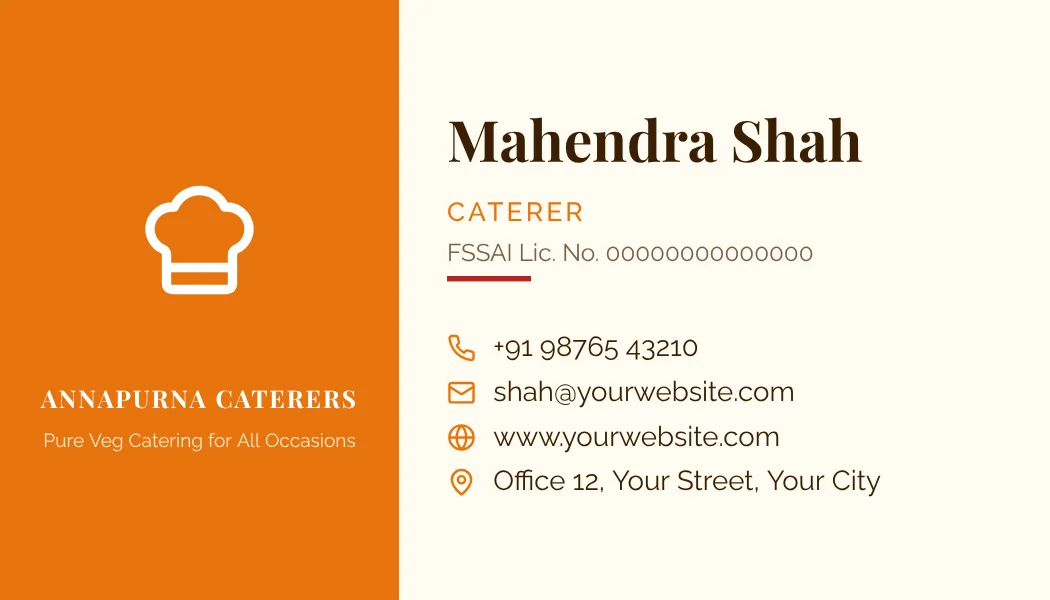
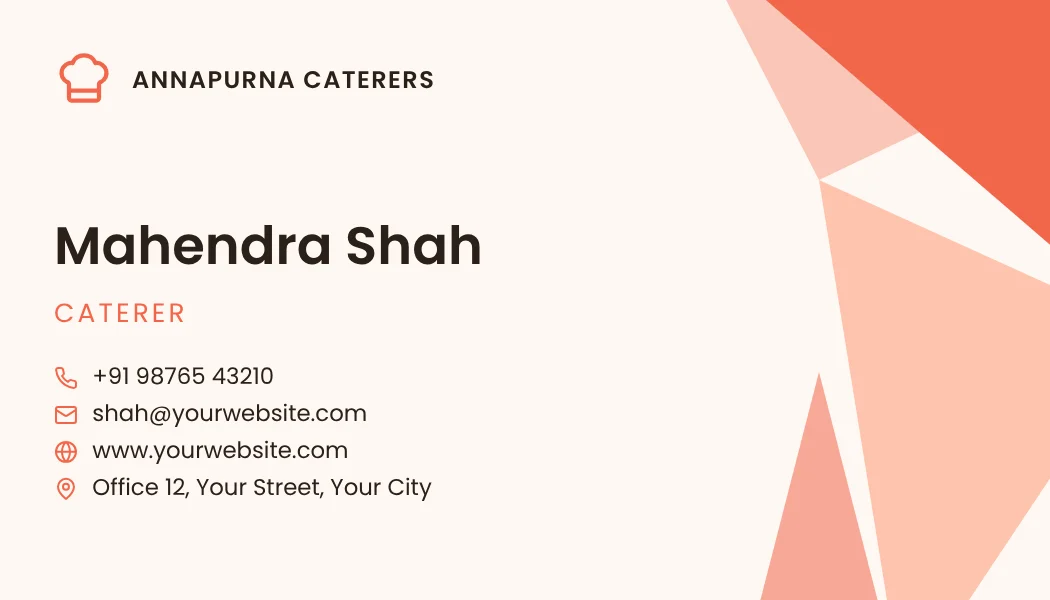
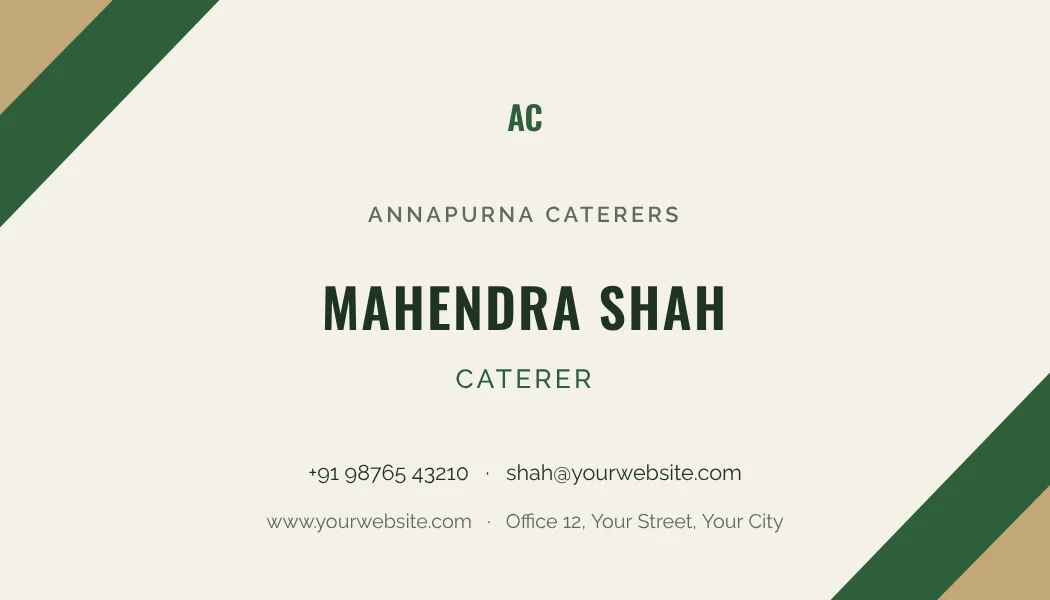
8 free catering visiting card templates
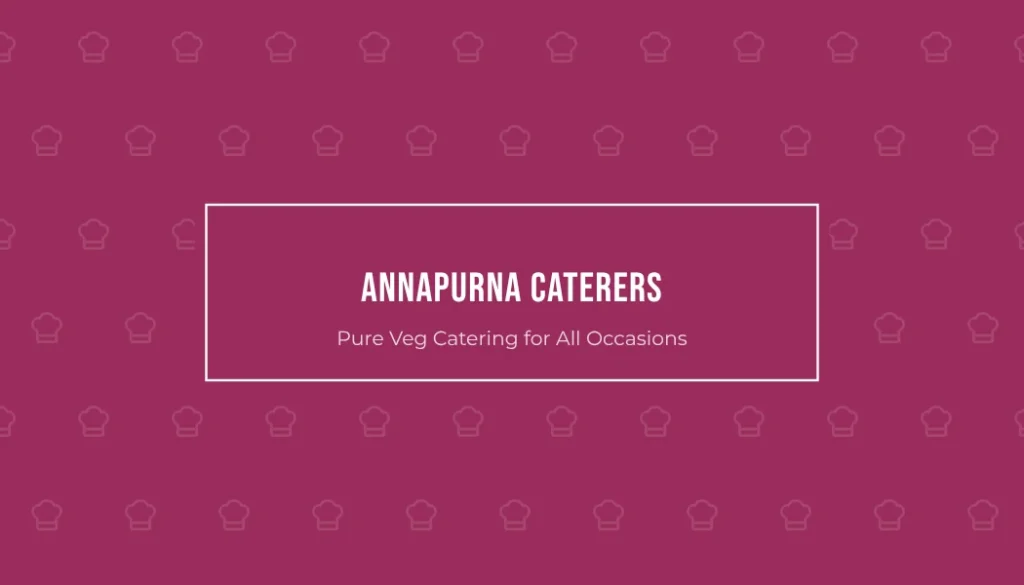
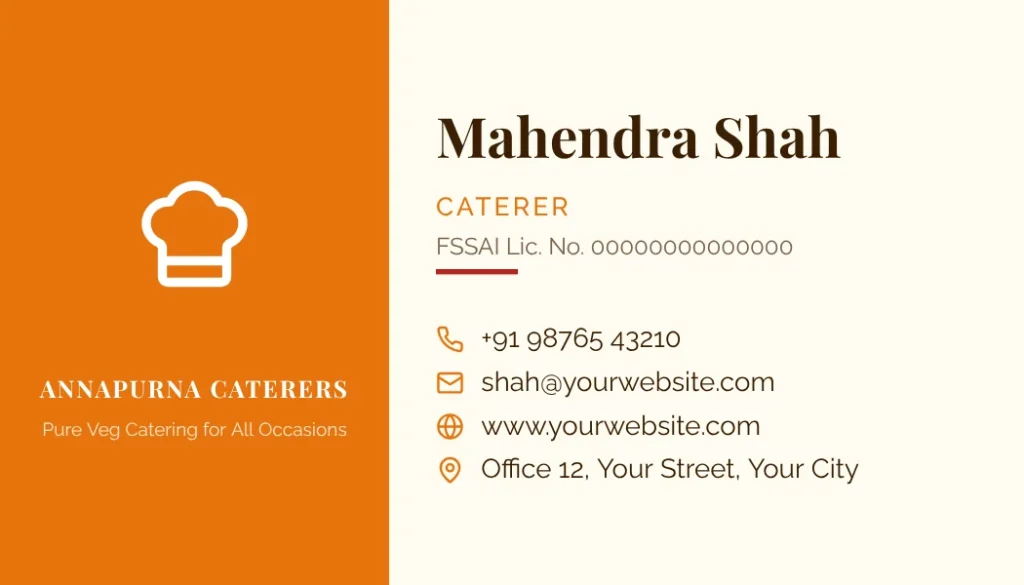
Hover or tap a card to see the back. Customize to edit and download.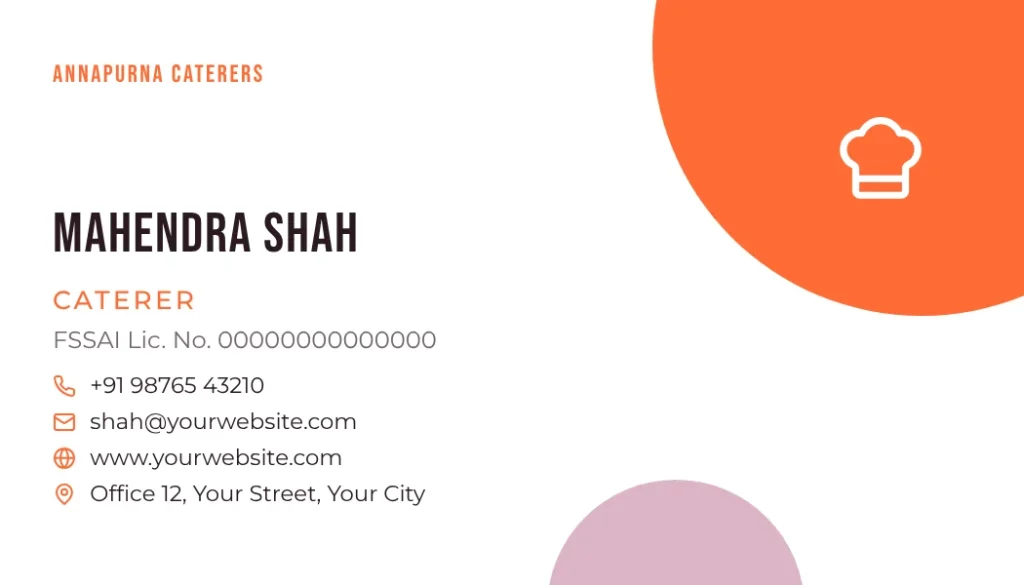
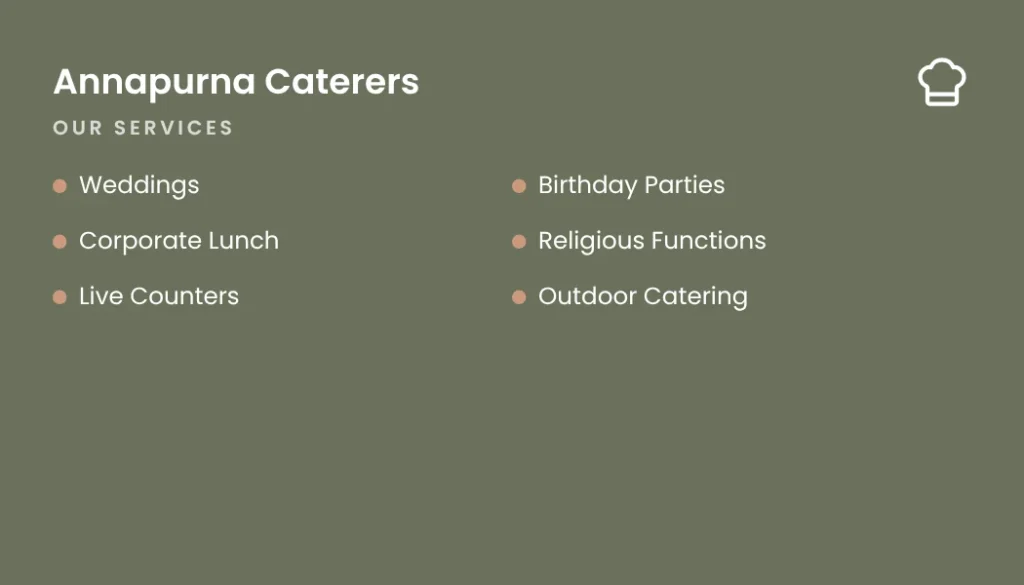
FSSAI licence number on a caterer's card
FSSAI licence and registration numbers are 14 digits. Since late 2021 food businesses must show them on bills, invoices and cash memos, as well as on labels and premises. Visiting cards are not covered by that requirement, but many caterers print the number anyway because hosts and corporate clients look for it.
- Write it as "FSSAI Lic. No." followed by all 14 digits, copied from your certificate.
- If you hold a basic registration rather than a licence, write "FSSAI Reg. No." so the wording matches your document.
- Keep it in small but readable type (8 pt or larger) near the bottom of the front or on the back.
If you bill companies, add your 15-character GSTIN on the back as well.
What else a catering visiting card should include
- Food type in the tagline: "Pure Veg Catering for All Occasions", "Jain Food Available", "Gujarati, Punjabi and South Indian Menus".
- Capacity: "Small gatherings to large weddings" or a guest range you can genuinely serve.
- Name and role: Caterer, Proprietor, Head Chef.
- Phone and WhatsApp: menus and quotes are usually shared on WhatsApp.
- Kitchen or office address and service area ("Ahmedabad and nearby").
Design moods for catering cards
- Saffron, turmeric yellow and deep red: warm, festive and appetising; suits wedding and religious function caterers.
- Green and white: signals pure veg at a glance; a small green veg-style dot near the tagline is widely recognised.
- Black and gold: premium banquets and corporate catering.
- Motifs: banana leaf, thali, kalash, copper handi or a chef's hat line drawing.
Food photos are tempting, but small photos print dark and muddy on a card; save them for the QR-linked menu. More palettes are in visiting card colour combinations, and the restaurant visiting card page covers dine-in businesses.
Back side ideas
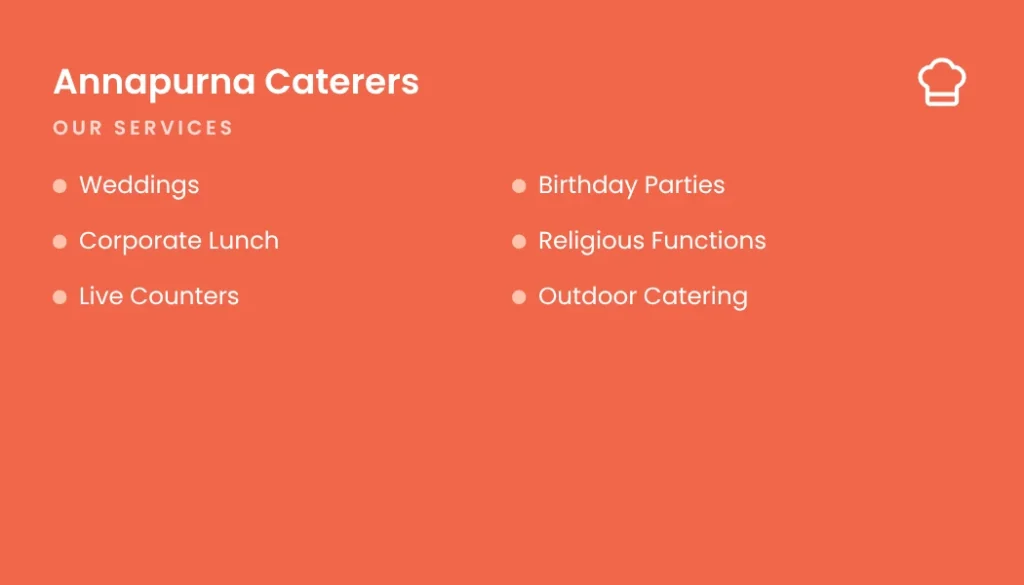
- Occasions served: Weddings, Birthday Parties, Corporate Lunch, Religious Functions, Live Counters, Outdoor Catering.
- Speciality counters: chaat, pav bhaji, dosa, jalebi; whichever you are known for.
- QR code to your menu or photos, at least 0.8 x 0.8 in (about 2 x 2 cm) with a clear border.
- Gujarati or Hindi text for families who prefer it; the maker supports both scripts.
- A line like "Tasting on request" if you offer it.
Sample caterers visiting card layout
- Annapurna Caterers
- Pure Veg Catering for All Occasions (Jain food available)
- Mahendra Shah, Caterer
- Phone and WhatsApp
- Kitchen address, service area
- FSSAI Lic. No. (14 digits)
- Back: occasions list, menu QR code
Printing tips
In India, 3.5 x 2 inches is the most common size and some printers use 91 x 55 mm; check with your printer (see our visiting card size guide). Cards placed at buffet counters get handled with food on fingers, so matte lamination is practical. Saffron and red can shift when printed in CMYK, so ask for a proof. For large weddings, keep a stack of cards in a holder at the counter and refill it during service.
Frequently asked questions
Is an FSSAI number required on a catering visiting card?
FSSAI numbers, which have 14 digits, must appear on bills, invoices and cash memos since late 2021, and on labels and premises. Visiting cards are not specifically required to carry them, but many caterers print the number because clients look for it.
What should a caterers visiting card include?
Business name, a tagline that states your food type such as pure veg or Jain, your name, phone and WhatsApp, kitchen address, service area, guest capacity and FSSAI number. Use the back for occasions served and a QR code to your menu.
Which colours suit an Indian catering visiting card design?
Saffron, turmeric yellow and deep red feel festive and appetising. Green and white signal pure veg. Black and gold suit premium banquet catering. Choose one main colour and keep the phone number in a dark, high-contrast shade.
Should I put food photos on my catering card?
Small photos usually print dark and lose detail at card size. Use simple illustrations such as a thali or handi on the card, and link to a menu or photo album with a QR code on the back.
Can I make a catering visiting card in Gujarati or Hindi?
Yes. The maker supports Gujarati and Hindi text, so you can print your business name, tagline or services in the local language. Many caterers keep English on the front and the regional language on the back.
More templates
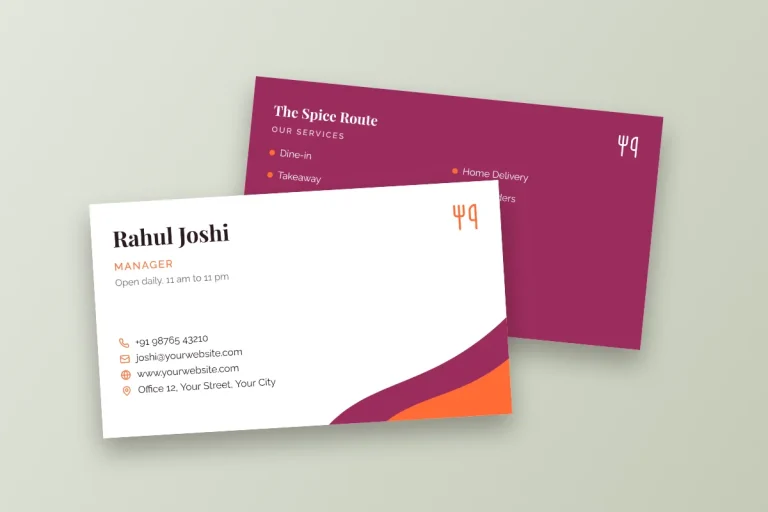
 Restaurant Visiting Card DesignAppetising visiting card designs for restaurants, hotels, cafes and bakeries. Show your hours, add a map or...
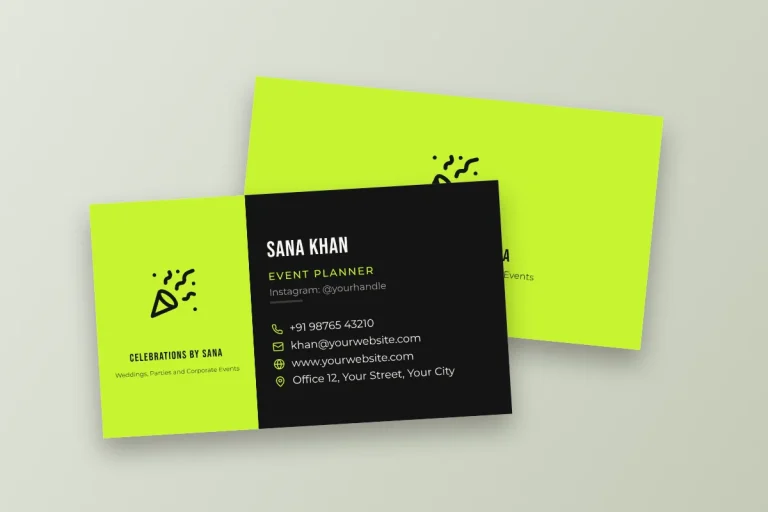
- Event Management Visiting CardBuild an event management visiting card that looks like one of your own celebrations: festive, organised and...
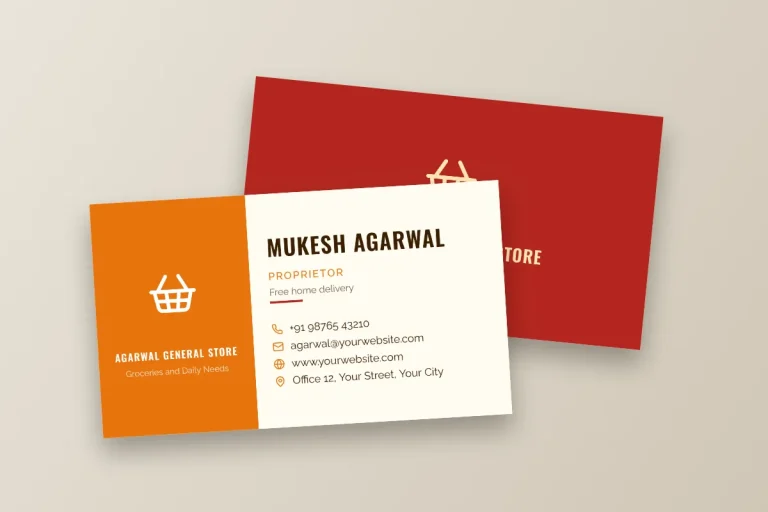
- General Store Visiting Card DesignBright, easy-to-read general store visiting card templates for kirana shops, grocery stores and provision...
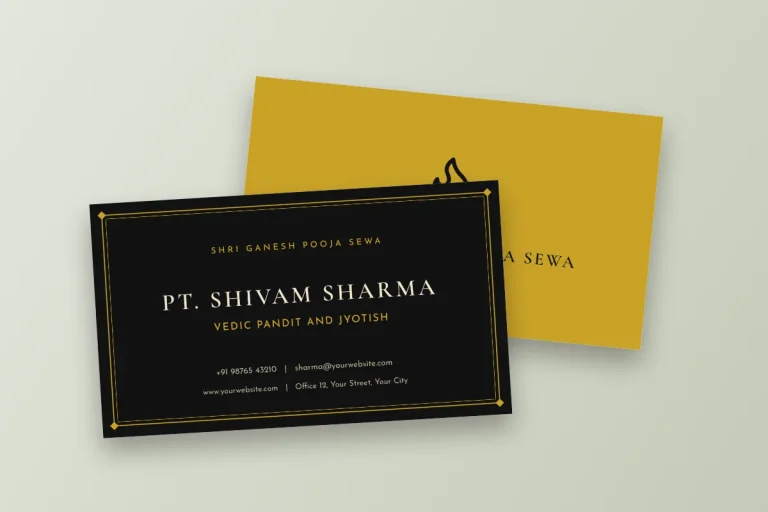
- Visiting Card for Pandit JiSaffron, maroon and gold visiting card designs for pandits, purohits and jyotish practitioners, in Hindi,...