Agriculture Visiting Card Design: Free Farm, Agro and Dairy Card Templates
Earthy, practical agriculture visiting card templates for seed and fertiliser dealers, farms, dairies and organic produce sellers. Add licence details and local-language text, then download free.
An agriculture visiting card needs to work for farmers in a mandi or at the shop counter: big readable text, the products you stock, your licence details and a phone number that is easy to dial. These templates are made for agro input dealers (seeds, fertilisers, pesticides), drip irrigation suppliers, farm equipment sellers, dairy farms and organic produce businesses. Each uses placeholder details that you replace in the visiting card maker.
The maker supports Hindi and Gujarati text, so you can print your shop name or product list in the language your customers read.
8 free agriculture visiting card templates
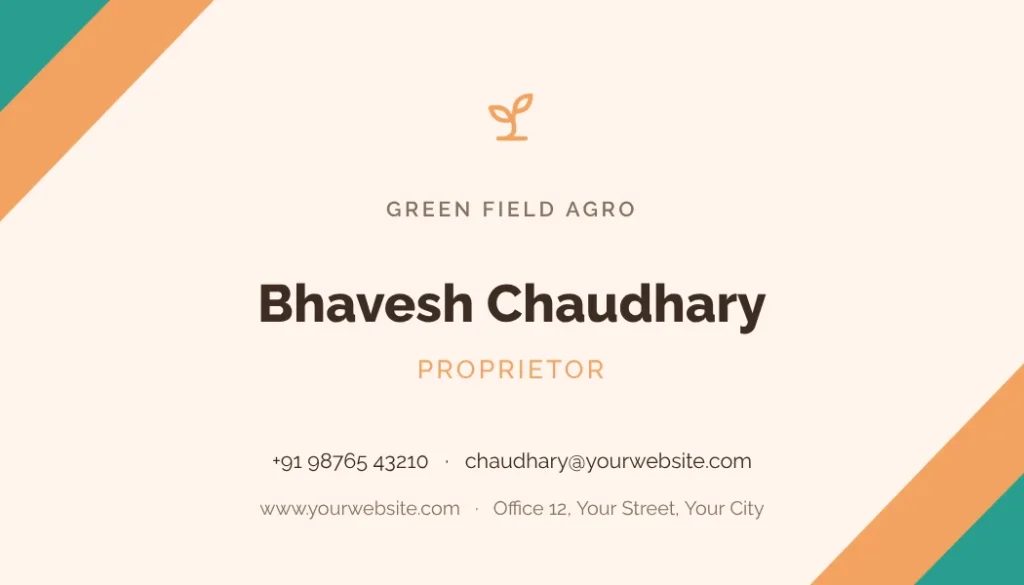
Hover or tap a card to see the back. Customize to edit and download.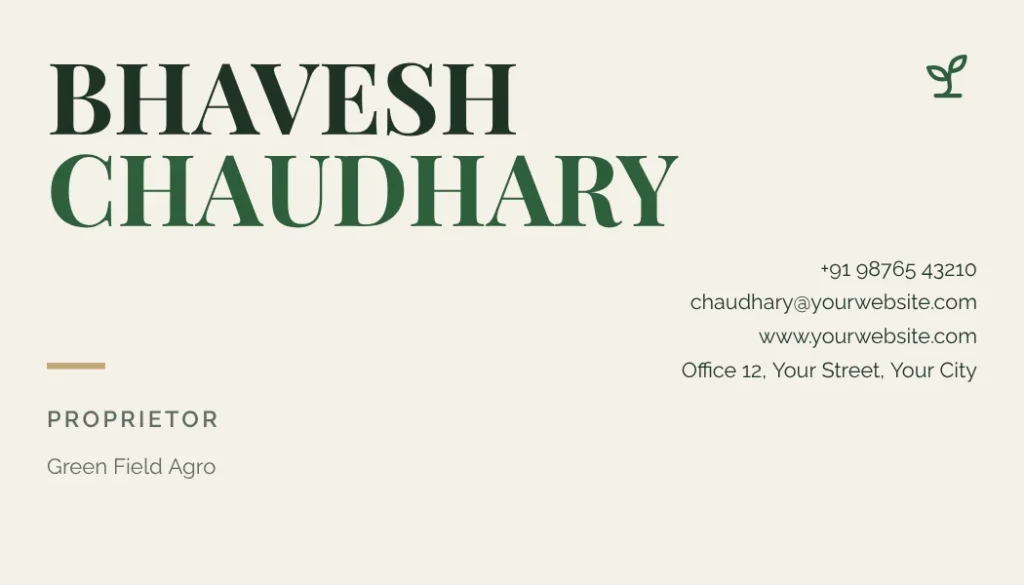

Licences and registration numbers for agro dealers
Dealers who sell seeds, fertilisers or pesticides in India need state licences for each category. Many dealers print the licence numbers on the back of the card, copied exactly as they appear on the licence and labelled by type (Seed Licence No., Fertiliser Licence No., Pesticide Licence No.). Write "Licensed Dealer" on the front only if you hold the relevant licences.
If you are GST registered, the GSTIN is a 15-character alphanumeric number, so proofread it character by character. Dairies and farms that sell milk, ghee or paneer under an FSSAI licence or registration have a 14-digit number. It must appear on bills and invoices but is not required on visiting cards, though some dairies print it to build trust.
What to put on an agriculture card
- Shop, farm or dairy name in large type, in English and the local language if you serve both.
- Proprietor name and mobile number, plus a second number for the shop.
- Products or services: seeds, fertilisers, pesticides, drip irrigation, farm tools, cattle feed, dairy products.
- Address with village, taluka or the nearest market yard.
- Licence details as above.
For dairy farms, add milk delivery timings and the areas you cover. For organic growers, describe how you grow ("chemical-free" only if accurate) and avoid using any certification name or logo you do not hold.
Colors and design moods for farm businesses
- Leaf green and white: the classic agro look, easy to read in daylight.
- Wheat gold and deep brown: warm and earthy, suits grain traders and seed companies.
- Sky blue and fresh green: works for drip irrigation and water management suppliers.
- Cream and soft green with hand-drawn leaves: fits organic farms and farm-to-home dairies.
Simple icons (a sprouting seed, a tractor, a milk can) communicate faster than paragraphs. Pick a ready texture from the free visiting card backgrounds or see more pairings in visiting card colour combinations.
Back side ideas
- Licence numbers and GSTIN in a neat block.
- Product categories with icons, or the crops you specialize in.
- Seasonal note: "Kharif and Rabi seed stock available".
- Dairy delivery timings and a monthly booking line.
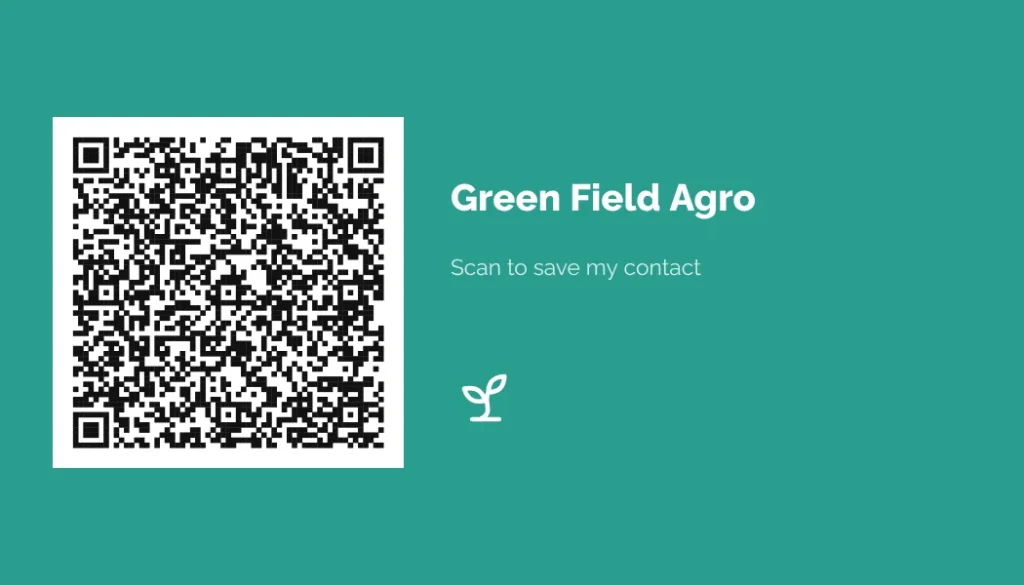
- A QR code that saves your number, useful because many buyers will call rather than visit.
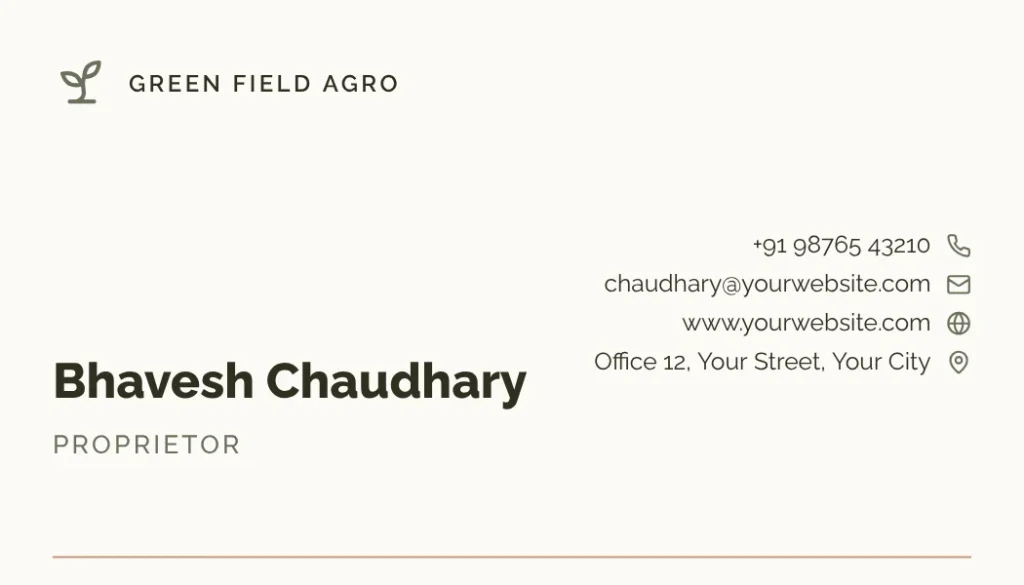
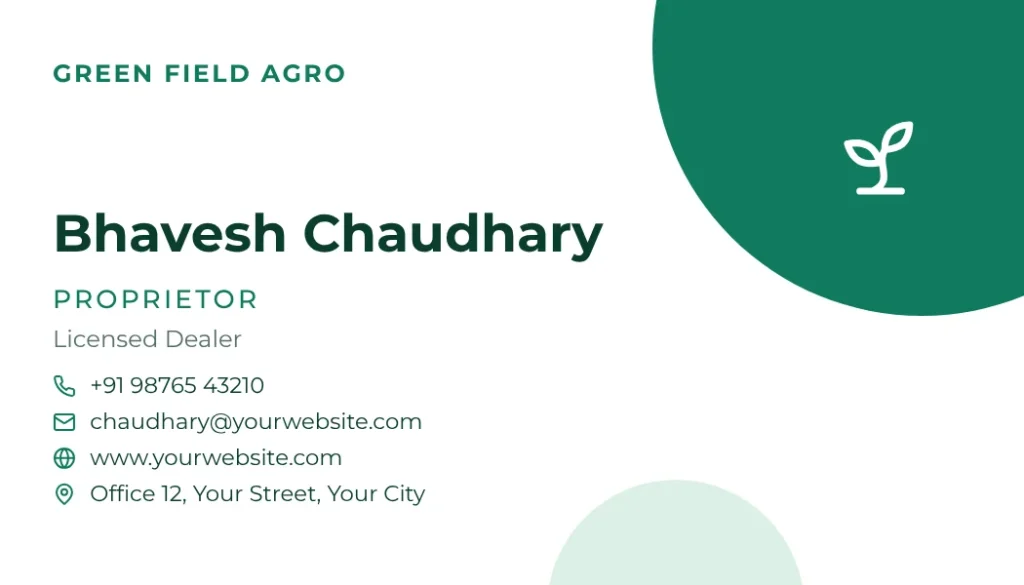
Sample agriculture visiting card layout
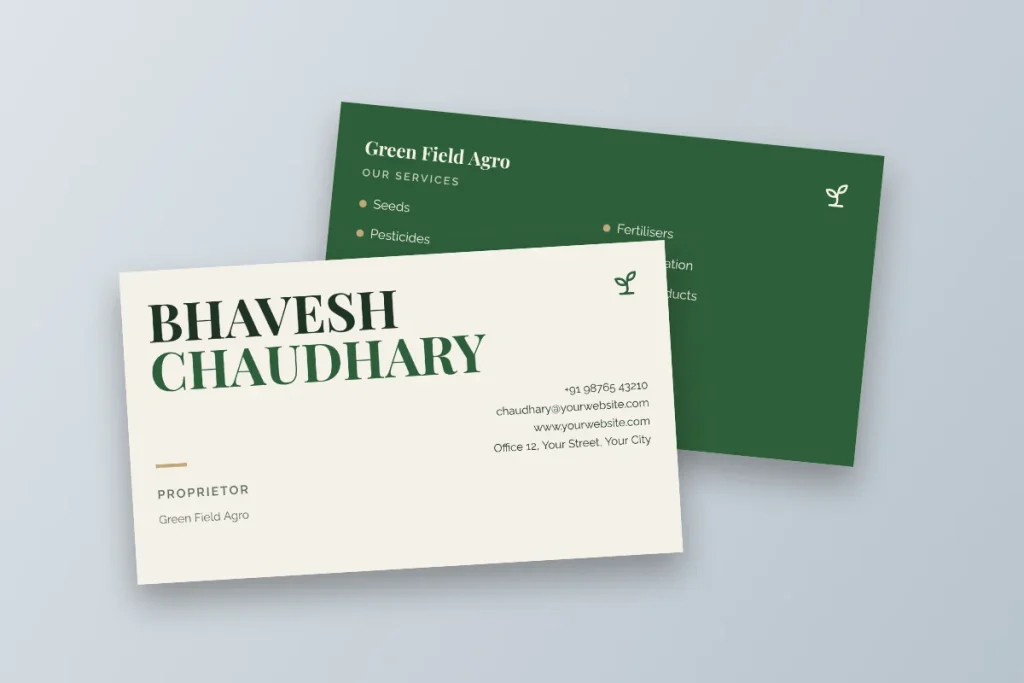
Front:
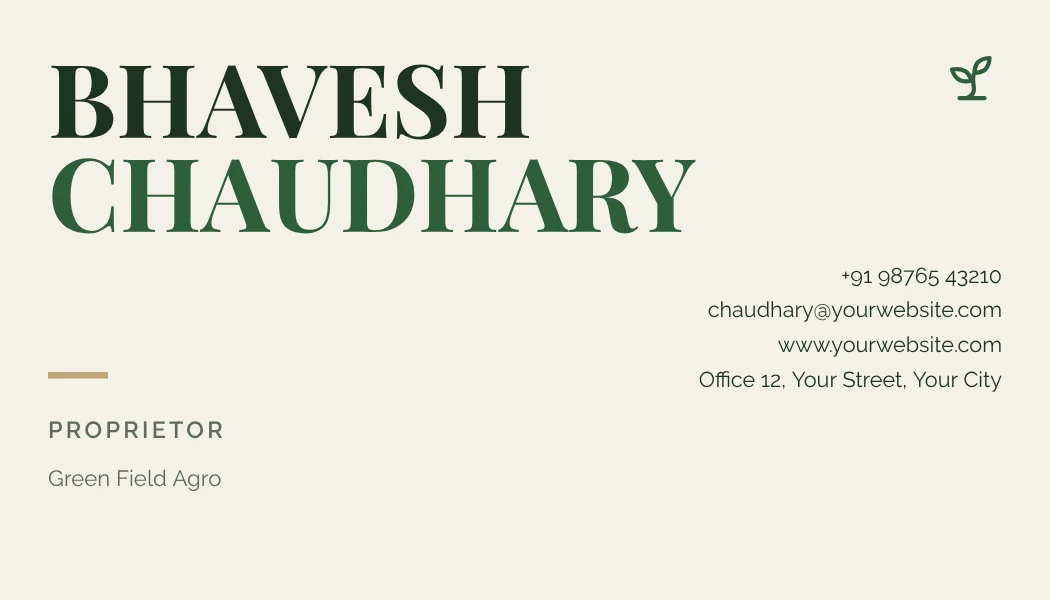
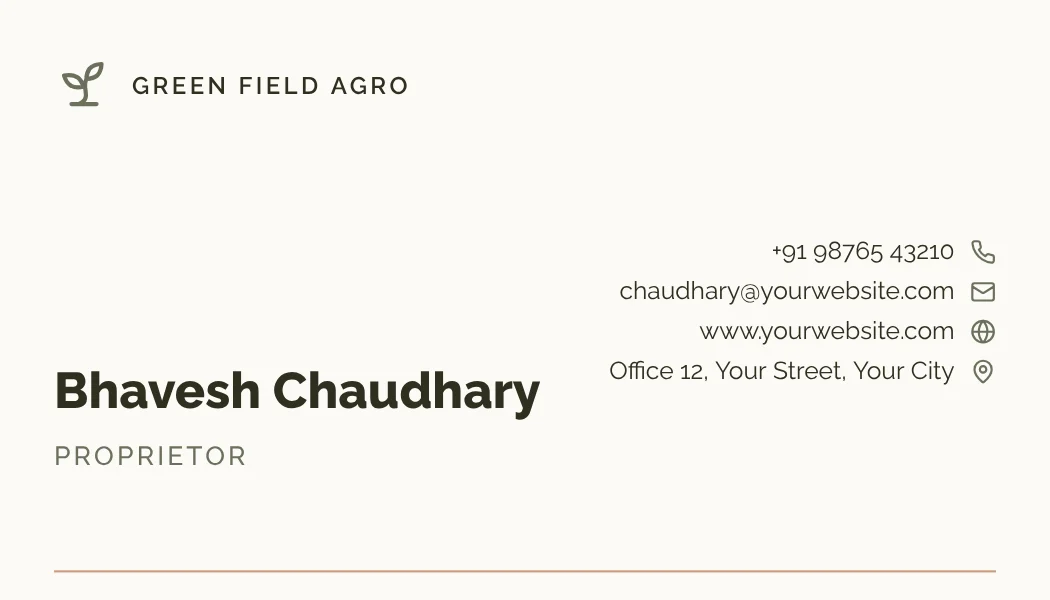
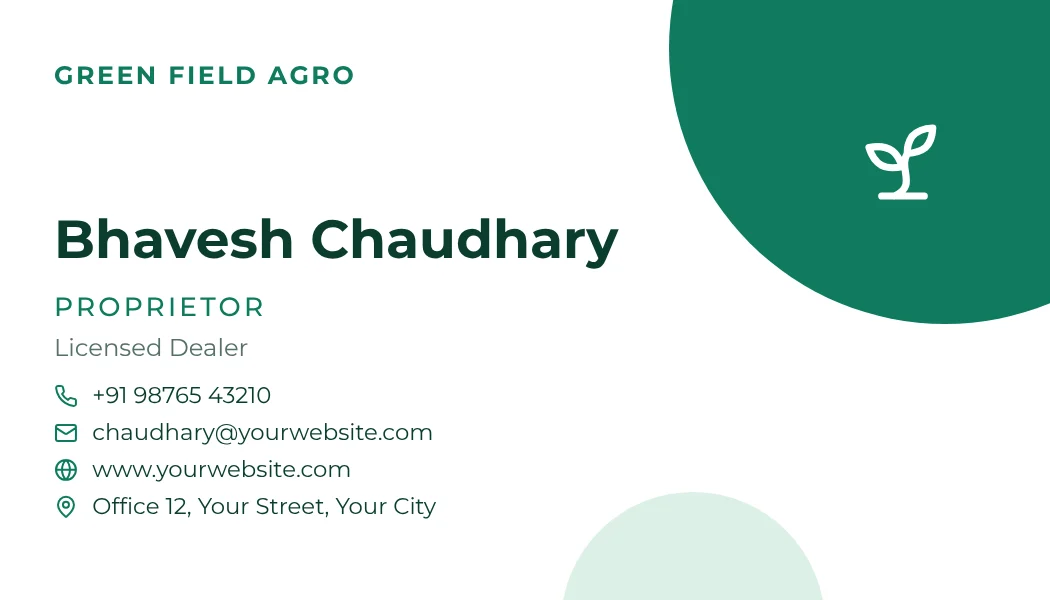
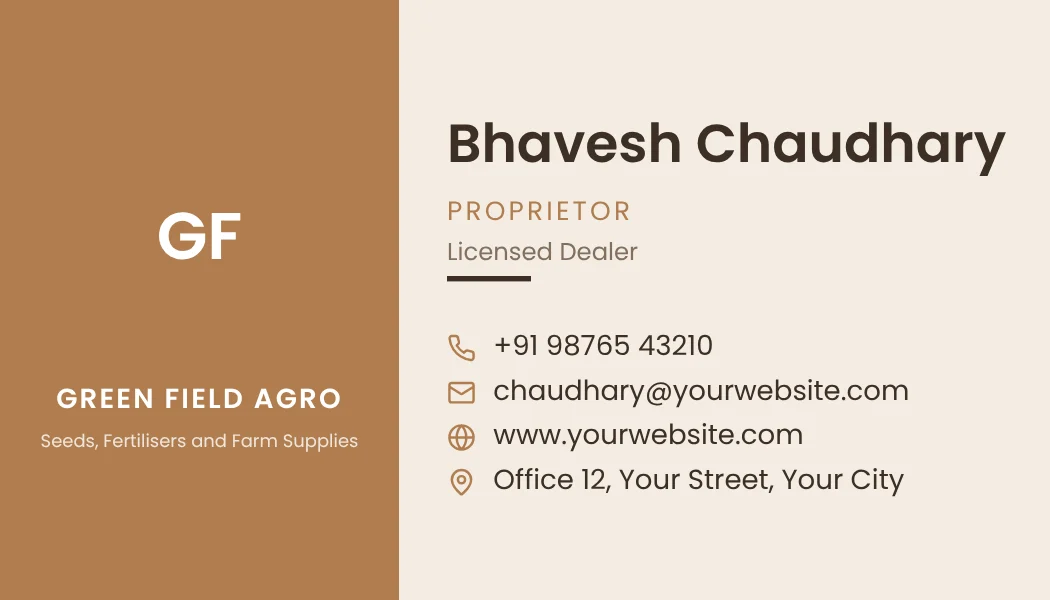
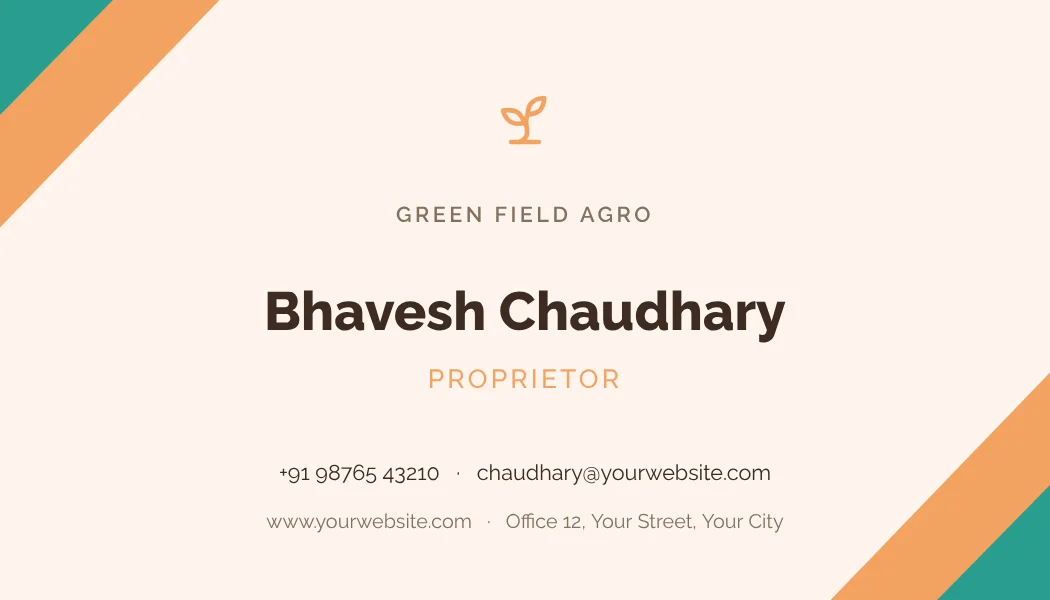
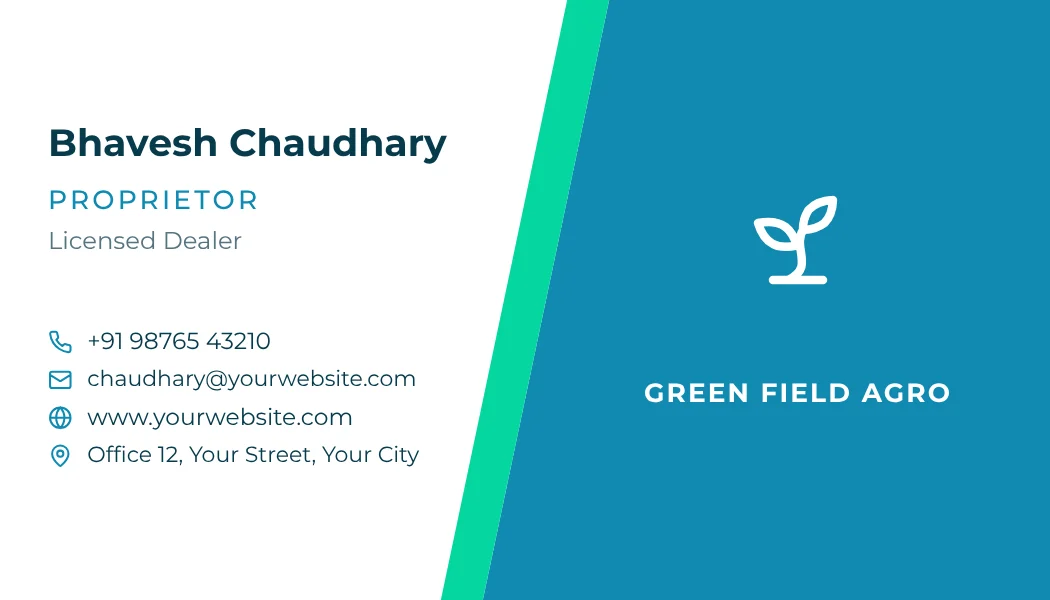
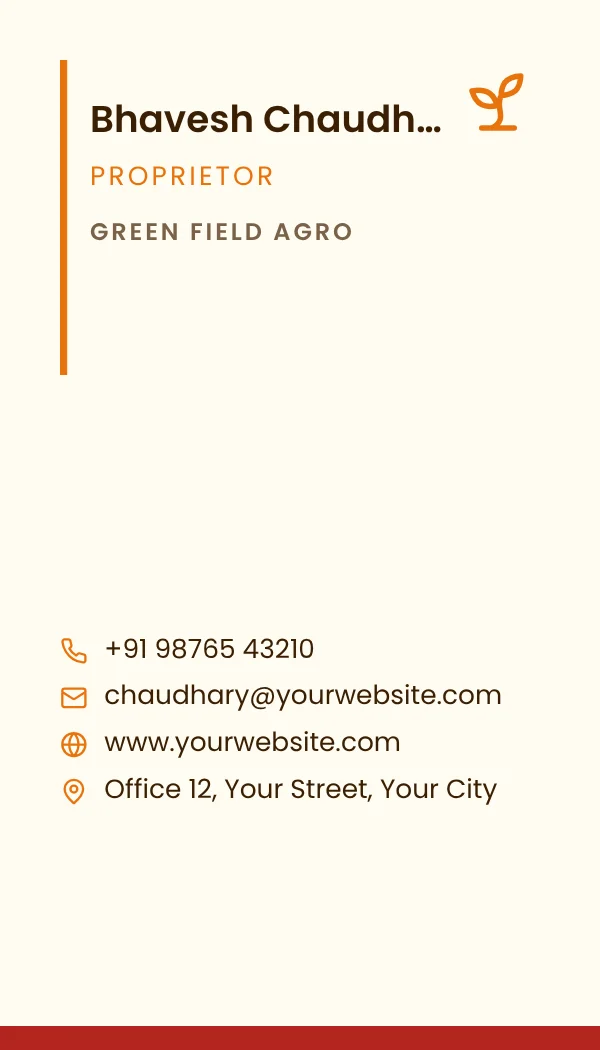
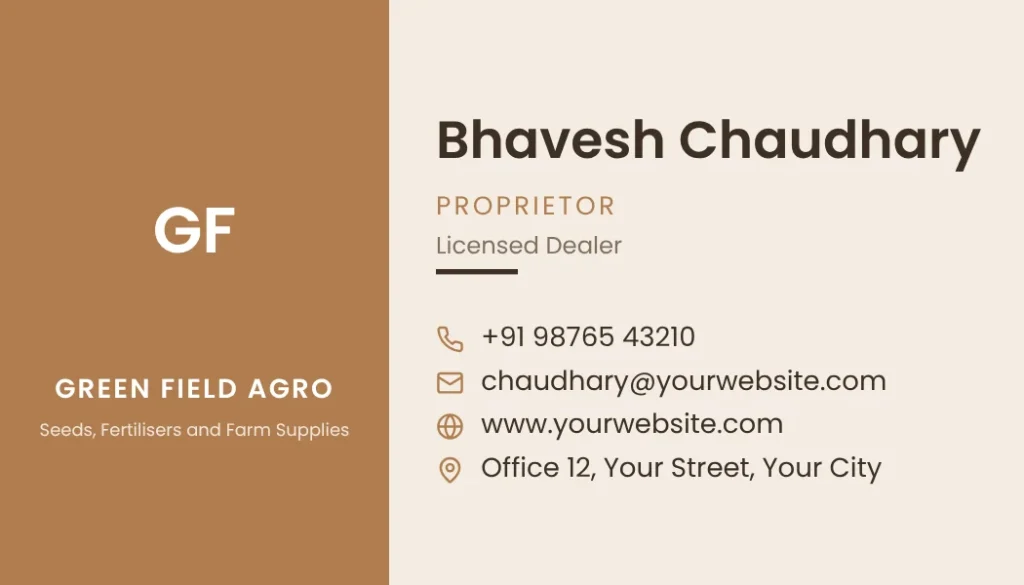
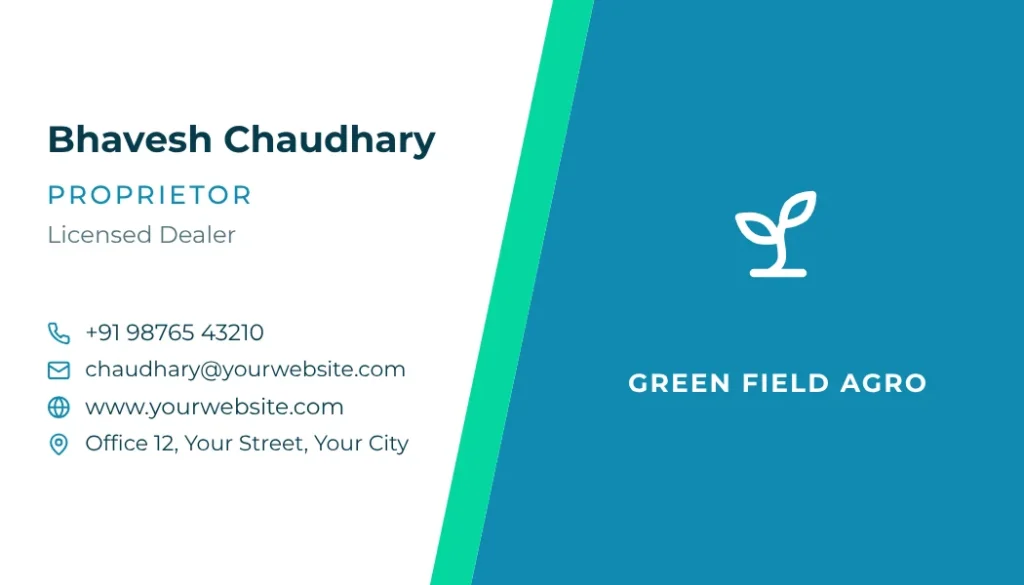
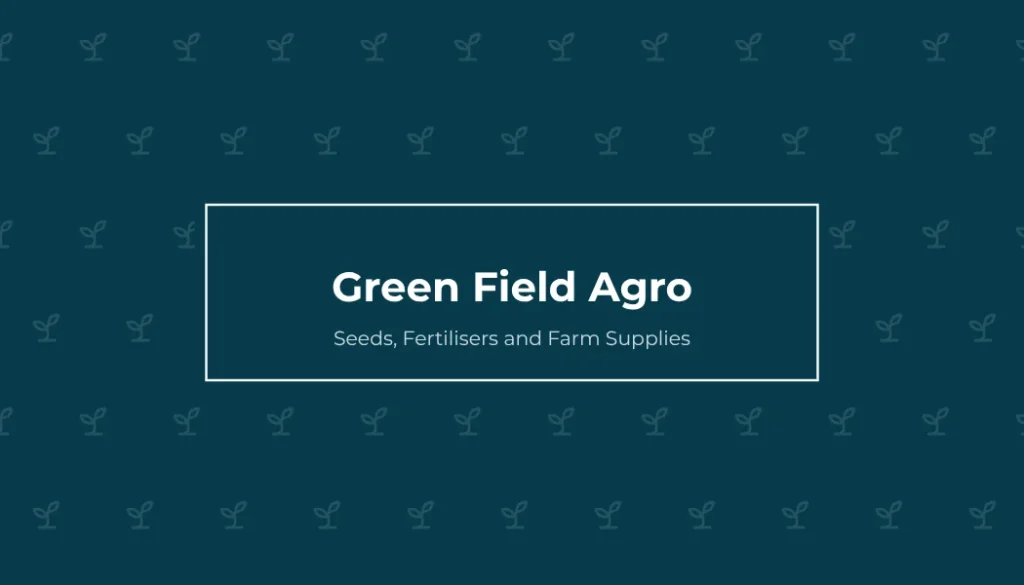
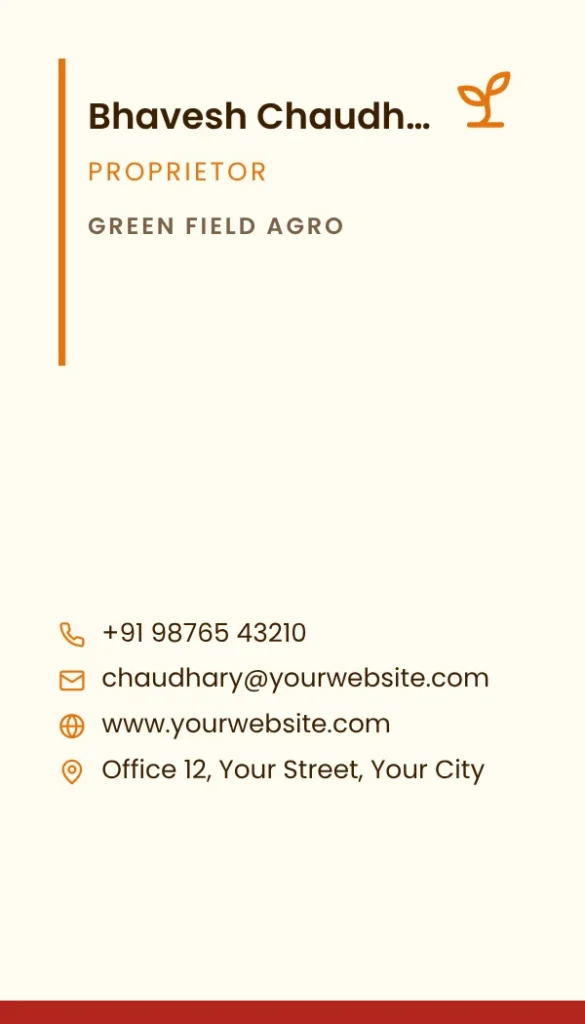
- Green Field Agro (logo with leaf mark)
- Seeds, Fertilisers and Farm Supplies
- Bhavesh Chaudhary, Proprietor
- Licensed Dealer
- Mobile and shop numbers
- Address near market yard
Back:
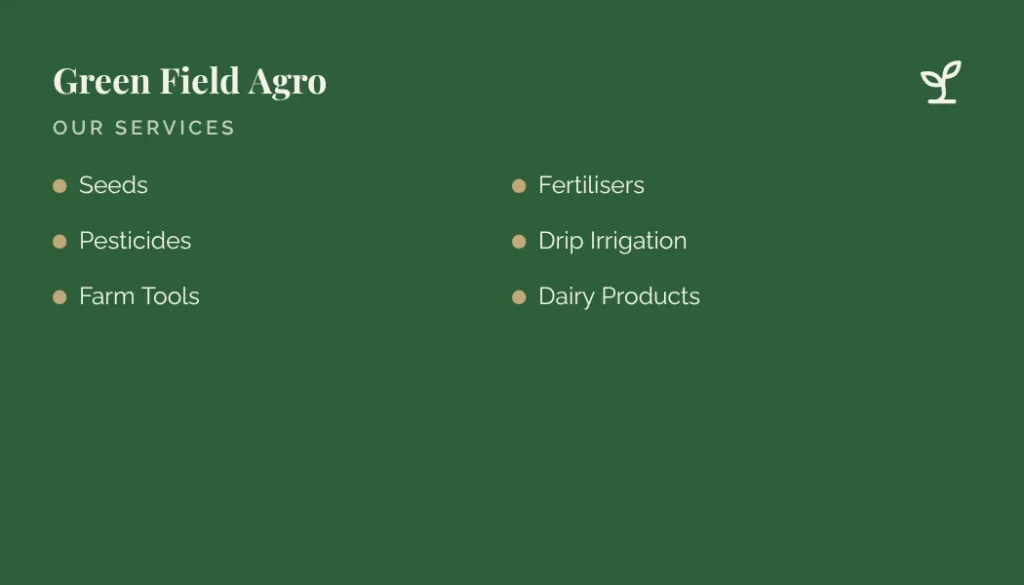
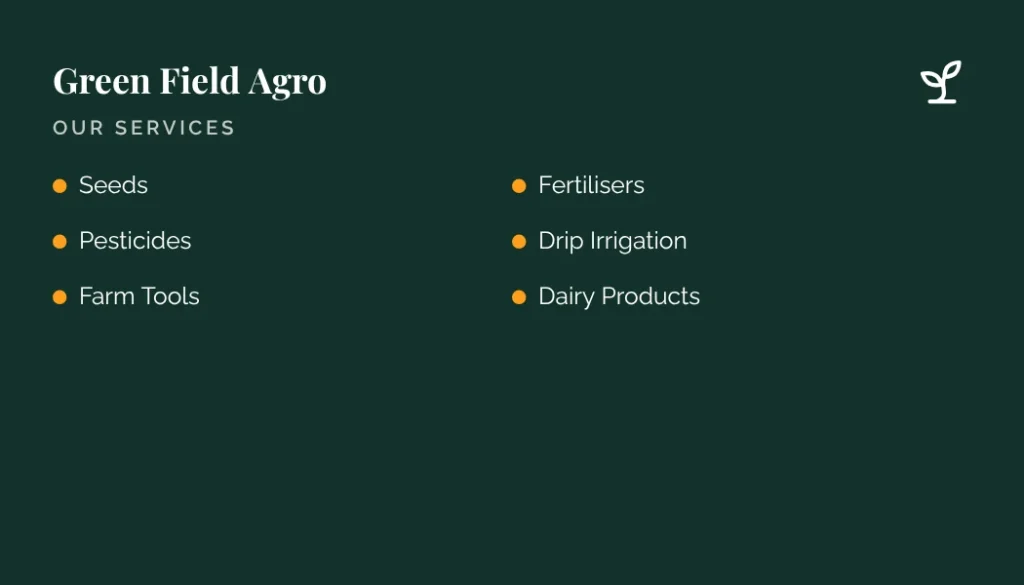
- Seeds, Fertilisers, Pesticides, Drip Irrigation, Farm Tools
- Seed, fertiliser and pesticide licence numbers
- GSTIN
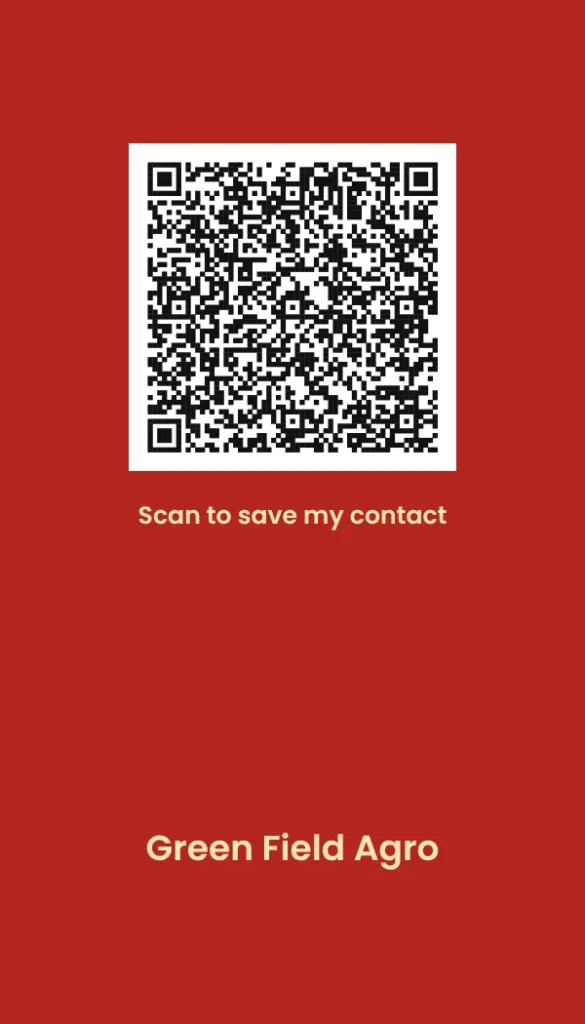
- QR code to save contact
Printing tips for rural and market use
In India, 3.5 x 2 inches is the most common size; some printers use 91 x 55 mm, so ask your printer (see the visiting card size guide). Agriculture cards travel in shirt pockets and get handled in dust and rain, so choose a sturdy stock and lamination. Use dark text on light backgrounds, keep the phone number large, and keep all text at 8 pt or larger. If you print Hindi or Gujarati, check the matras and conjuncts on the proof, since a broken character looks careless. Dealers who also sell tools can borrow ideas from the hardware shop visiting card page.
Frequently asked questions
What should be written on an agriculture visiting card?
Write the shop, farm or dairy name, the proprietor name, mobile numbers, the products you sell such as seeds, fertilisers, pesticides or dairy items, and the address with village or market yard. Agro input dealers often add their licence numbers and GSTIN on the back, copied exactly from the documents.
Do I need to show my fertiliser or pesticide licence number on the card?
It is not usually a card requirement, but agro dealers in India need state licences to sell seeds, fertilisers and pesticides, and printing the numbers shows customers you are a licensed dealer. Copy each number exactly as it appears on the licence and update the card when a licence is renewed with a new number.
What is a good design for a dairy farm visiting card?
Use cream, white and soft green or blue with a simple cow or milk can icon. List the products you sell, such as milk, ghee and paneer, your delivery timings and the areas you cover. A save-contact QR code on the back helps customers who order regularly by phone or WhatsApp.
Can I make an agriculture visiting card in Hindi or Gujarati?
Yes. The maker supports Hindi and Gujarati text, so you can print the shop name, products or full card in the local language. Many dealers use a bilingual layout with the local language on the front and English details on the back. Always proofread the printed proof for broken characters.
Which colors suit an agriculture visiting card design?
Green and white is the most familiar agro combination. Wheat gold with deep brown suits grain and seed businesses, sky blue with green fits irrigation suppliers, and cream with soft green works for organic farms. Keep backgrounds light behind phone numbers so they are easy to read outdoors.
More templates
 Hardware Visiting Card DesignHardware visiting card templates for hardware stores, paint dealers, sanitary and plumbing shops, and tiles...
- Transport Visiting Card DesignTransport visiting card templates for fleet owners, roadlines, courier offices and packers and movers, with...
- General Store Visiting Card DesignBright, easy-to-read general store visiting card templates for kirana shops, grocery stores and provision...
- Visiting Card Colour Combinations That WorkFifteen visiting card colour combinations used in our templates, with hex codes you can copy, plus which...